
Cushioning Material for Safe and Protective Packaging
What is the Cushioning Material
A cushioning material performs its fundamental role—reducing the forces created when one surface comes abruptly into contact with another—by compressing or deforming in such a way as to produce a gradual, rather than instantaneous, change in velocity. This reduces potentially high decelerations to more moderate values and thereby minimizes damaging impact forces.
Package cushioning is used to protect items during shipment. Vibration and impact shock during shipment and loading/unloading are controlled by cushioning to reduce the chance of product damage. Cushioning is usually inside a shipping container such as a corrugated box.
A cushion is a soft furry bag of some ornamental material, stuffed with wool, hair, feathers, polyester staple fiber, non-woven material, or even paper torn into fragments. It may be used for sitting or kneeling upon, or to soften the hardness or angularity of a chair or couch.
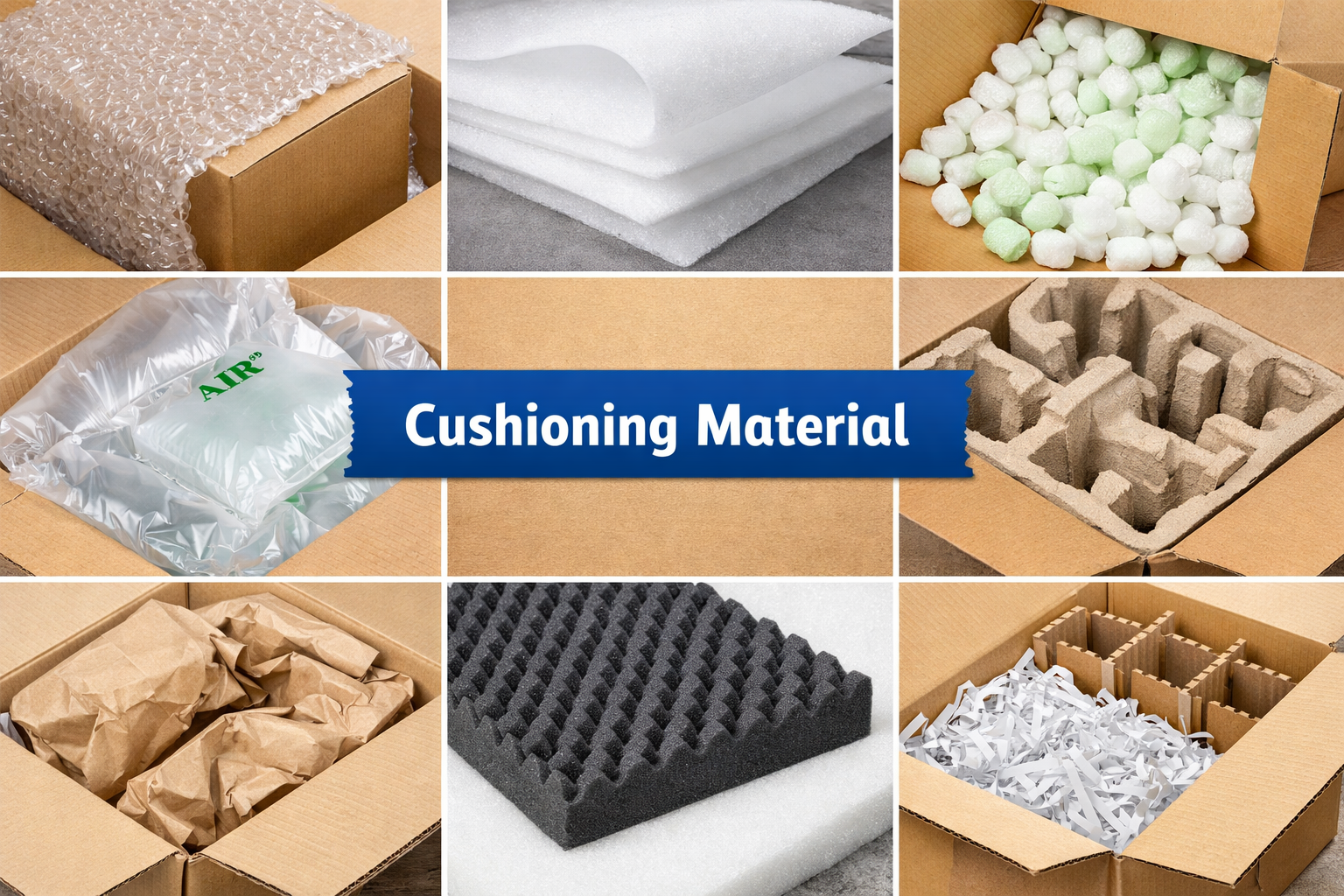
Types of Cushioning Material & Benefits
Paperboard composite honeycomb structures are also used for cushioning. Foam structures – Several types of polymeric foams are used for cushioning. The most common are: Expanded Polystyrene (also Styrofoam), polypropylene, polyethylene, and polyurethane
Biodegradable Bubble Cushioning
Besides being eco friendly, biodegradable bubble cushioning offers excellent protection for shipping and storing fragile items. Each sheet, roll, or bag consists of multiple air cushions that look like air bubbles. These air cushions are evenly distributed, which protects fragile items from shock and vibration.
Invented in 1960 by engineers Marc Chavannes and Al Fielding,
Bubble Cushioning minimizes the need for additional packaging materials, which decreases the cost of the shipment. It is also lightweight, which also keeps shipping charges low. Besides bags, sheets, and rolls, bubble wrap comes in large bubble, small bubble, anti-static, and even self-adhesive varieties.
However, the cushioning needs to be properly selected for good performance. Important features of cushioning include:
material type
material thickness
material resilience (the material returns to its original shape after impact)
correct loading (i.e. the cushion material is not too soft (overloaded) or too hard (insufficiently loaded) for a very fragile object)
free movement of the cushioned item (i.e. the object is not tightly bound in the cushioning material)
Bubble wrap consists of sheets of plastic film with enclosed “bubbles” of air. These sheets can be layered or wrapped around items to be shipped. A variety of engineered inflatable air cushions are also available. Note that inflated air pillows used for void-fill are not suited for cushioning.
Benefits of Cling Wrapping
- Cling film is less expensive (food plastic wrap)
- Cling wrap grips tightly and seals easily around a variety of surfaces to help keep your food fresher, longer.