Packaging Materials

Lined Cartons Packaging

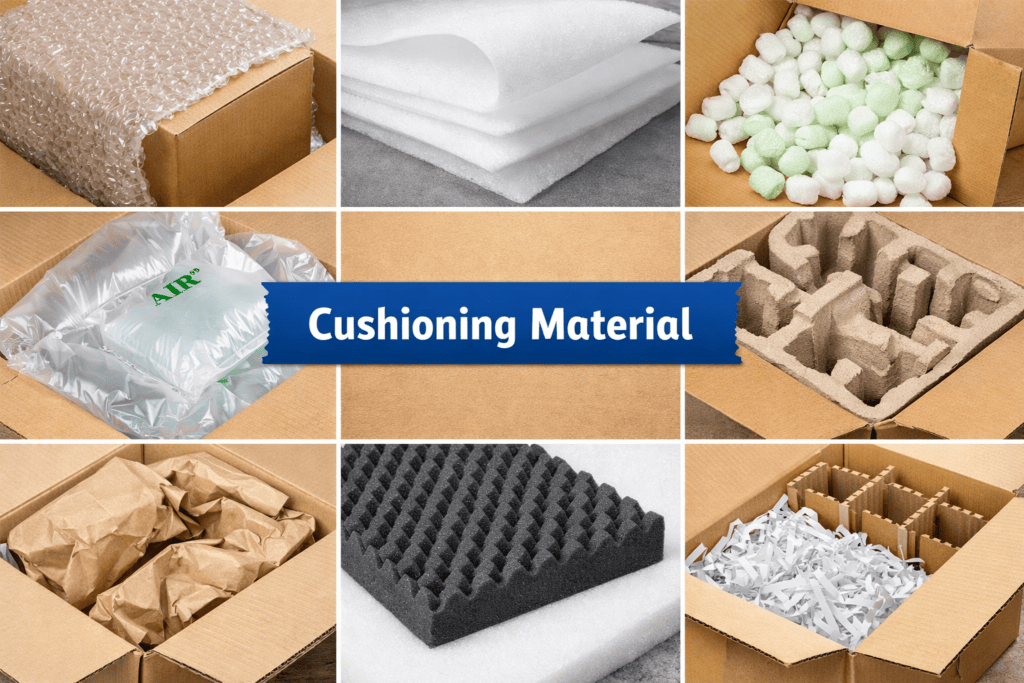
Lined Cartons Packaging What is the Lined Cartons Packaging A cushioning material performs its fundamental role—reducing the forces created when one surface comes abruptly into contact with another—by compressing or deforming in such a way as to produce a gradual, rather than instantaneous, change in velocity. This reduces potentially high decelerations to more moderate values and thereby minimizes damaging impact forces.Package cushioning is used to protect items during shipment. Vibration and impact shock during shipment and loading/unloading are controlled by cushioning to reduce the chance of product damage. Cushioning is usually inside a shipping container, such as a corrugated box.A cushion is a soft, furry bag of some ornamental material, stuffed with wool, hair, feathers, polyester staple fiber, non-woven material, or even paper torn into fragments. It may be used for sitting or kneeling upon, or to soften the hardness or angularity of a chair or couch. Types of Cushioning Material & Benefits Paperboard composite honeycomb structures are also used for cushioning. Foam structures – Several types of polymeric foams are used for cushioning. The most common are: Expanded Polystyrene (also Styrofoam), polypropylene, polyethylene, and polyurethane.Biodegradable Bubble CushioningBesides being eco-friendly, biodegradable bubble cushioning offers excellent protection for shipping and storing fragile items. Each sheet, roll, or bag consists of multiple air cushions that look like air bubbles. These air cushions are evenly distributed, which protects fragile items from shock and vibration.Invented in 1960 by engineers Marc Chavannes and Al Fielding,Bubble Cushioning minimizes the need for additional packaging materials, which decreases the cost of the shipment. It is also lightweight, which keeps shipping charges low. Besides bags, sheets, and rolls, bubble wrap comes in large bubble, small bubble, anti-static, and even self-adhesive varieties.However, the cushioning needs to be properly selected for good performance. Important features of cushioning include:material typematerial thicknessmaterial resilience (the material returns to its original shape after impact)correct loading (i.e., the cushion material is not too soft (overloaded) or too hard (insufficiently loaded) for a very fragile object)free movement of the cushioned item (i.e., the object is not tightly bound in the cushioning material)Bubble wrap consists of sheets of plastic film with enclosed “bubbles” of air. These sheets can be layered or wrapped around items to be shipped. A variety of engineered inflatable air cushions is also available. Note that inflated air pillows used for void-fill are not suited for cushioning. Bubble Wrap® Protective Packaging Bubble Wrap® is one of the most recognized packing solutions on the market. It has been protecting your package contents for years. Bubble Wrap® air bubble film offers an economical solution for protective packaging needs. This packing solution reduces cost while providing long-term protection. Bubble Wrap® provides high performance and is also reusable/recyclable. Find out how Bubble Wrap® protective packaging can benefit your shipping operation. Loose fill– Some cushion products are flowable and are packed loosely around the items in the box. The box is closed to tighten the pack. This includes expanded polystyrene foam pieces (Foam peanuts), similar pieces made of starch-based foams, and common popcorn. The amount of loose fill material required and the transmitted shock levels vary with the specific type of material.[2] Paper– Paper can be manually or mechanically wadded up and used as a cushioning material. Heavier grades of paper provide more weight-bearing ability than old newspapers. Creped cellulose wadding is also available. (Movers often wrap objects with several layers of Kraft paper or embossed pulp before putting them into boxes.)Corrugated fiberboard pads– Multi-layer or cut-and-folded shapes of corrugated board can be used as cushions.[3] These structures are designed to crush and deform under shock stress and provide some degree of cushioning. Paperboard composite honeycomb structures are also used for cushioning.[4]Foam structures– Several types of polymeric foams are used for cushioning. The most common are: Expanded Polystyrene (also Styrofoam), polypropylene, polyethylene, and polyurethane. These can be molded, engineered shapes or sheets that are cut and glued into cushion structures. Convoluted (or finger) foams are sometimes used [5]. Some degradable foams are also available.[6]Foam-in-place is another method of using polyurethane foams. These fill the box, fully encapsulating the product to immobilize it. It is also used to form engineered structures.Plastic foam cushioning materials are mainly made from polystyrene (PS), polyurethane (PU), and polyethylene (PE)Molded pulp– Pulp can be molded into shapes suitable for cushioning and for immobilizing products in a package. Molded pulp is made from recycled newsprint and is recyclable.Inflated products–Other– Several other types of cushioning are available, including suspension cushions, thermoformed end caps[7] [8], and various types of shock mounts. C Tapered cell walls absorb shock and dampen vibration. Top film construction enables performance-enhancing air transfer between cells. O Cushioning performance unaffected by puncture, age, temperature, or atmospheric conditionsCushioning limits shocks and vibration to levels that objects can tolerate without damage.Modern cushioning materials can provide very effective protection for fragile items when they are used correctly. Rubberized fiber cushioning is relatively insensitive to the effects of moisture and high or low temperatures and exhibits very good recovery even on long-term exposure to loads.Foam PackingFoam Packing is fast, easy to use, and versatile. It protects against shock and vibration during shipping and handling. There are many significant benefits to using Foam Packing. Firstly, it saves your money without compromising proper protection. It also saves you time as it instantly expands in seconds for a protective cushion of a package of any size, shape, or weight. Learn more about how these unique cushioning properties can protect your package throughout any shipping process.Air Bag Protective PackagingIf your products need protective packaging, we have your solution. Fill-Air® Inflatable Packaging Systems provide excellent protection and efficient void fill while reducing material and shipping costs. Fill-Air air bag cushions can be produced in several different sizes to fit any package you have. They are fast and easy to use while saving valuable warehouse space. All the while, producing clean, professional-looking packaging.

Lined Cartons Packaging Read More »
Cushioning Material

Cushioning Material

Cushioning Material for Safe and Protective Packaging What is the Cushioning Material A cushioning material performs its fundamental role—reducing the forces created when one surface comes abruptly into contact with another—by compressing or deforming in such a way as to produce a gradual, rather than instantaneous, change in velocity. This reduces potentially high decelerations to more moderate values and thereby minimizes damaging impact forces.Package cushioning is used to protect items during shipment. Vibration and impact shock during shipment and loading/unloading are controlled by cushioning to reduce the chance of product damage. Cushioning is usually inside a shipping container, such as a corrugated box.A cushion is a soft, furry bag of some ornamental material, stuffed with wool, hair, feathers, polyester staple fiber, non-woven material, or even paper torn into fragments. It may be used for sitting or kneeling upon, or to soften the hardness or angularity of a chair or couch. Types of Cushioning Material & Benefits Paperboard composite honeycomb structures are also used for cushioning. Foam structures – Several types of polymeric foams are used for cushioning. The most common are: Expanded Polystyrene (also Styrofoam), polypropylene, polyethylene, and polyurethane.Biodegradable Bubble CushioningBesides being eco-friendly, biodegradable bubble cushioning offers excellent protection for shipping and storing fragile items. Each sheet, roll, or bag consists of multiple air cushions that look like air bubbles. These air cushions are evenly distributed, which protects fragile items from shock and vibration.Invented in 1960 by engineers Marc Chavannes and Al Fielding,Bubble Cushioning minimizes the need for additional packaging materials, which decreases the cost of the shipment. It is also lightweight, which keeps shipping charges low. Besides bags, sheets, and rolls, bubble wrap comes in large bubble, small bubble, anti-static, and even self-adhesive varieties.However, the cushioning needs to be properly selected for good performance. Important features of cushioning include:material typematerial thicknessmaterial resilience (the material returns to its original shape after impact)correct loading (i.e., the cushion material is not too soft (overloaded) or too hard (insufficiently loaded) for a very fragile object)free movement of the cushioned item (i.e., the object is not tightly bound in the cushioning material)Bubble wrap consists of sheets of plastic film with enclosed “bubbles” of air. These sheets can be layered or wrapped around items to be shipped. A variety of engineered inflatable air cushions is also available. Note that inflated air pillows used for void-fill are not suited for cushioning. Bubble Wrap® Protective Packaging Bubble Wrap® is one of the most recognized packing solutions on the market. It has been protecting your package contents for years. Bubble Wrap® air bubble film offers an economical solution for protective packaging needs. This packing solution reduces cost while providing long-term protection. Bubble Wrap® provides high performance and is also reusable/recyclable. Find out how Bubble Wrap® protective packaging can benefit your shipping operation. Loose fill– Some cushion products are flowable and are packed loosely around the items in the box. The box is closed to tighten the pack. This includes expanded polystyrene foam pieces (Foam peanuts), similar pieces made of starch-based foams, and common popcorn. The amount of loose fill material required and the transmitted shock levels vary with the specific type of material.[2] Paper– Paper can be manually or mechanically wadded up and used as a cushioning material. Heavier grades of paper provide more weight-bearing ability than old newspapers. Creped cellulose wadding is also available. (Movers often wrap objects with several layers of Kraft paper or embossed pulp before putting them into boxes.)Corrugated fiberboard pads– Multi-layer or cut-and-folded shapes of corrugated board can be used as cushions.[3] These structures are designed to crush and deform under shock stress and provide some degree of cushioning. Paperboard composite honeycomb structures are also used for cushioning.[4]Foam structures– Several types of polymeric foams are used for cushioning. The most common are: Expanded Polystyrene (also Styrofoam), polypropylene, polyethylene, and polyurethane. These can be molded, engineered shapes or sheets that are cut and glued into cushion structures. Convoluted (or finger) foams are sometimes used [5]. Some degradable foams are also available.[6]Foam-in-place is another method of using polyurethane foams. These fill the box, fully encapsulating the product to immobilize it. It is also used to form engineered structures.Plastic foam cushioning materials are mainly made from polystyrene (PS), polyurethane (PU), and polyethylene (PE)Molded pulp– Pulp can be molded into shapes suitable for cushioning and for immobilizing products in a package. Molded pulp is made from recycled newsprint and is recyclable.Inflated products–Other– Several other types of cushioning are available, including suspension cushions, thermoformed end caps[7] [8], and various types of shock mounts. C Tapered cell walls absorb shock and dampen vibration. Top film construction enables performance-enhancing air transfer between cells. O Cushioning performance unaffected by puncture, age, temperature, or atmospheric conditionsCushioning limits shocks and vibration to levels that objects can tolerate without damage.Modern cushioning materials can provide very effective protection for fragile items when they are used correctly. Rubberized fiber cushioning is relatively insensitive to the effects of moisture and high or low temperatures and exhibits very good recovery even on long-term exposure to loads.Foam PackingFoam Packing is fast, easy to use, and versatile. It protects against shock and vibration during shipping and handling. There are many significant benefits to using Foam Packing. Firstly, it saves your money without compromising proper protection. It also saves you time as it instantly expands in seconds for a protective cushion of a package of any size, shape, or weight. Learn more about how these unique cushioning properties can protect your package throughout any shipping process.Air Bag Protective PackagingIf your products need protective packaging, we have your solution. Fill-Air® Inflatable Packaging Systems provide excellent protection and efficient void fill while reducing material and shipping costs. Fill-Air air bag cushions can be produced in several different sizes to fit any package you have. They are fast and easy to use while saving valuable warehouse space. All the while, producing clean, professional-looking packaging.

Cushioning Material Read More »

Cling Wrapping

Cling Wrapping

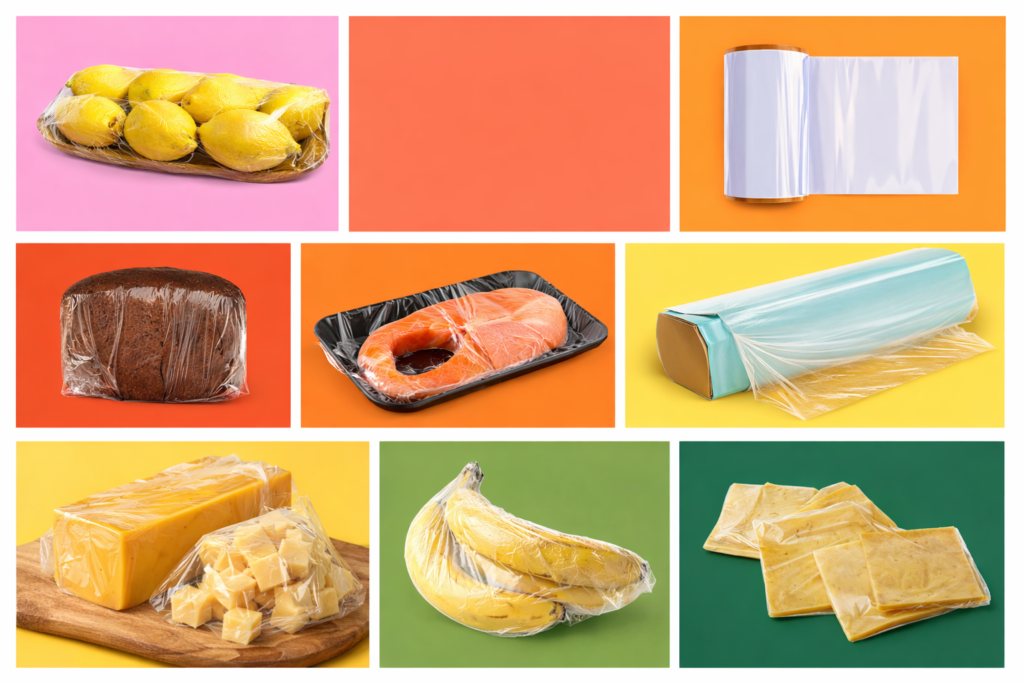
Cling Wrapping for Hygienic and Secure Food Packaging What is the Cling Wrapping Cling wrapping is a thin plastic film typically used for sealing food items in containers to keep them fresh over a longer period of time.Plastic wrap is commonly made out of PVC (Poly Vinylidene Chloride). The most popular alternative in recent years is LDPE (Low-Density Polyethylene) because it is considered to be safer for the body.A thin transparent plastic film (CLING FILM) that adheres to surfaces and to itself, used as wrapping or covering for food, is plastic or cling wrapping.“Wrap them in cling film and freeze till needed.” Cling Wrapping Used For Food StorageCheese, half a lemon, a crusty loaf of bread, fruits, vegetables, cover a bowl, pack a snack, sandwich, lunch pack, bread wraps.Gift packing Benefits of Cling Wrapping Cling film is less expensive (food plastic wrap) Cling wrap grips tightly and seals easily around a variety of surfaces to help keep your food fresher, longer. Limitation of Cling Wrapping Do not allow cling wrap to come into direct contact with food when heating it. Heating food covered with plastic can melt the plastic on the food. Cling film is made from PVC, which contains disrupting phthalates, a chemical that keeps plastic soft. Cling film has been banned in America FAQs How thick is plastic wrap? Plastic wrap is typically 8–12 microns thick, making it thin, flexible, and suitable for sealing food. Can I use plastic wrap in the microwave? Yes, you can use plastic wrap in the microwave if it is microwave-safe and does not touch the food. Can plastic wrap be used to freeze food? Yes, plastic wrap can be used to freeze food as it helps prevent freezer burn and keeps food protected. Are the all plastic wraps are safe for packing foods? No, not all plastic wraps are food-safe; only those labeled food-grade or BPA-free should be used for packaging food. Plastic wrap is typically 8–12 microns thick, making it thin, flexible, and suitable for sealing food. Yes, you can use plastic wrap in the microwave if it is microwave-safe and does not touch the food. Yes, plastic wrap can be used to freeze food as it helps prevent freezer burn and keeps food protected. No, not all plastic wraps are food-safe; only those labeled food-grade or BPA-free should be used for packaging food.

Cling Wrapping Read More »

Bag In Box System

Bag In Box System

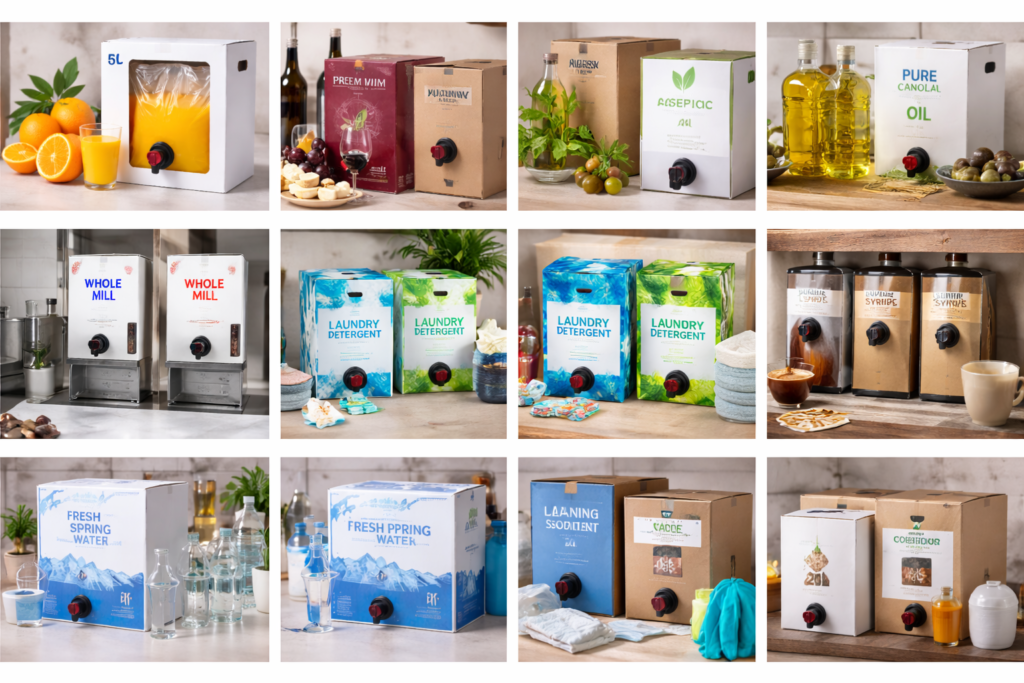
Bag-in-Box System of Packaging for Efficient Liquid Storage and Dispensing What is the Bag-in-Box System of Packaging The bag in box system of packaging is an ideal solution for packaging of liquids in quantities greater than 4 liters (up to 1000 liters). This system of packaging consists of three essential elements: A four side pre- sealed bag fitted with a spout and cap A rigid outer container– either a corrugated fiber board box or a drum The filling system- the bag post filling on the dedicated filling system is transported in the outer containers.Jump to Aseptic packaging- Bag in a box packaging is liked by producers because it is inexpensive. Seen from the environmental perspective, a bag also has benefits. The bag allows a contents of 1.5–1000 liters, so that less packaging or labelling is required.A bag-in-box or BiB is a type of container for the storage and transportation of liquids. It consists of a strong bladder (or plastic bag), usually made of several layers of metallised film or other plastics, seated inside a corrugated fiberboard box. Bag-in-Box System Used For Post mix syrup for the soft drink dispensing industry Aseptic food pulp Wine Milk based mixes for ice creams and dessertsOther uses Liquid detergents & chemicals Edible oil for institutional use Bakery shortening Motor oil Wine, beverages, beer, alcohol Pillow bag Benefits of Bag In Box System Economic compared to other packaging forms Occupies 30% space for the storage of empties Hygienic – the bag is always sealed, so no dust can settle on the filled products contact surface Dispensing convenience Filling system is simple, economic and flexible, size changes can be handled in minutes and troubleshooting training takes less than a day. Easy to use and disposal Reduces waste Products security Lowers cost Able to suit shelf life. Dispenser facility available 100% biodegradable

Bag In Box System Read More »

Stand Up Pouches

Stand Up Pouches

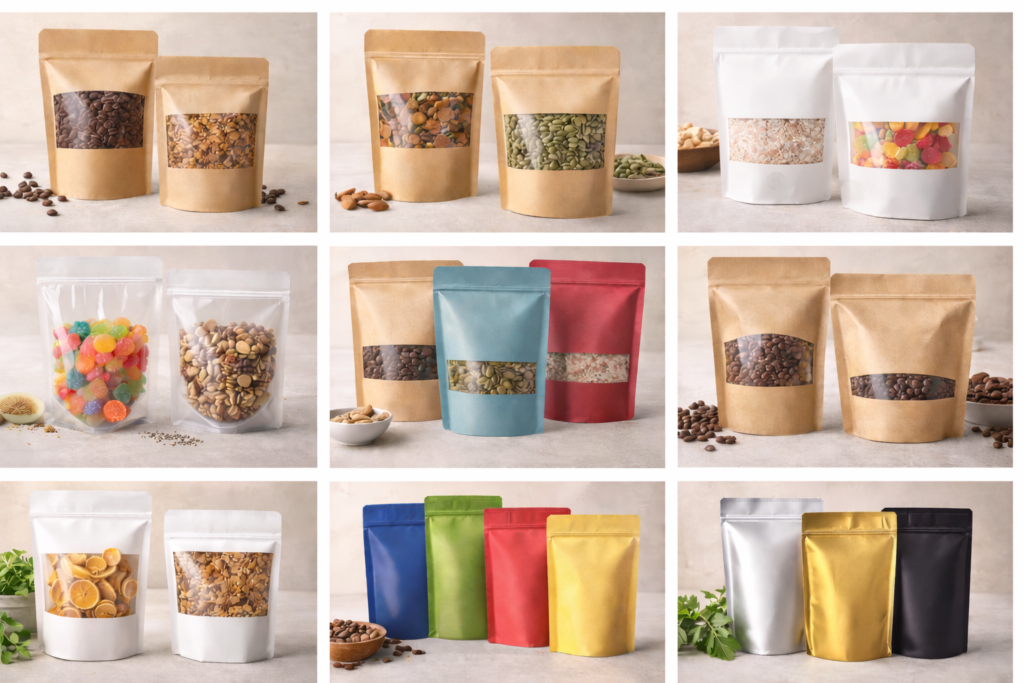
Stand Up Pouches for Modern Flexible Packaging Needs What are Stand Up Pouches? A Stand-Up Pouch (stand pack) is an economical packaging system. The shelf supporting soft packages is made of flexible plastic films.The stand-up pouches can be vacuum-packed, or nitrogen gas flush packaging methods can be employed.These pouches are a popular format for good packaging. The reason the leaf standup is because of the gusset at the bottom. When the bag is filled, the bottom flattens out, which allows it to stand straight up on a store shelf.Flexible packaging is commonly referred to as stand-up pouches.Stand-up pouches, sometimes called barrier bags, are multi-layered pouches. Very commonly used with food or perishable food.The stand-up pouch is made of multiple layers of barrier materials that have been laminated together to create one continuous sheet. Stand Up Pouches Used For Mainly used forGrains and snack foodsHealthy food, protein powdersMicrowaveable meals, crisps, nuts Others (non-food)LiquidsEngine oilPowderGarden materialLaundry detergentsPet food Benefits of Stand-Up Pouches Used Boost sales as they appear more attractive Save a lot of shelf space Various styles of stand-up pouches are available Protect against moisture or exposure to air(oxygen), vapor, odor, pests Transparent standup pouches Aesthetics and consumer convenience Printed pouches, you can print on the stand-up pouches what you want to focus on (highlight), and custom printing is possible Zipper, handle, spout, spot glossy area, as per your choice A useful pouring spout or easy reseal can be the deciding factor for consumers. Environmentally responsible packaging Food-grade material is used in making a stand-up pouch. Costs significantly less to ship than jars, cans & bottles Types (Styles) of Stand Up Pouches Box Styled Flat Bottomed Side Gussets Zip-Locked Transparent Doyen– (Round Bottom) The gusset is U-shaped (small size), useful for lightweight products (0.45kg or less). K-Seal- slightly taller than doyen, useful for (0.45kg to 2.25kg). Corner Bottom- (folded carton) no seat at the bottom, useful for heavier items. (2.3kg and higher)

Stand Up Pouches Read More »

Moulded Pulp Packaging

Moulded Pulp Packaging

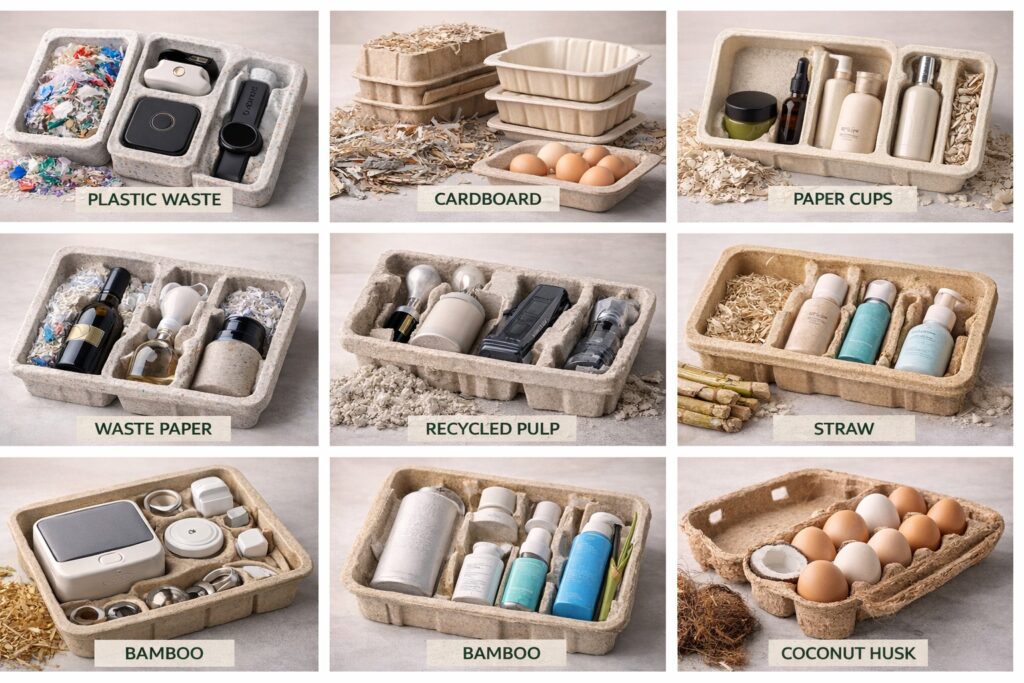
Moulded Pulp Packaging for Sustainable and Protective Solutions What is Moulded Pulp Packaging? Moulded Pulp Packaging, also named moulded pulp or moulded fiber, is a packaging material, typically made from recycled paperboard and /or newsprint. It is used for protective packaging or for food service trays and beverage carriers. Other typical uses are end caps, trays, plates, bowls, and clamshell containers. Moulded Fiber Packaging Used For Food Packaging– includes Clamshell and carryout food containers Cups, bowls, plates, food &serving trays Egg trays and cartons. Fruit, veg, berry, mushroom, etc Including those for bottled products, wine, jellies, etc Extended liquid retention, etc Moulded fiber products are capable of meeting every international food safety regulation and are supplied with specific food-safe specifications. Industrial or Engineered Packaging- Includes Electronics: cell phones, TV, modern DVDs, etc Household items, toasters, coffee makers, furniture, etc Vehicle parts, gears, panels, headlights, wheels, etc Industrial products, electrical, plumbing, tools, etc Product drop testing is an integral part of the design criteria. MedicalBedpans, urine bottles (single use), kidney dishes, bowls, etcHorticultural Trays & Pots Other Application/ Uses Pallets Film roll cradles Nursery containers and other material Office equipment Hospital disposable Benefits of Moulded Fiber Packaging Provide product protection in shipments Customer convenience Economic packaging Environmental benefits. Certified IMFA members provide molded fiber packaging design services and prototypes with cost estimates based on customer requirements. Molded fiber products, manufactured with waste paper or other natural fibers (which are essentially cellulose), are recyclable along with other waste paper and are biodegradable and compostable where facilities are available. Both fiber & water are recycled and reused in manufacturing, resulting in almost zero waste. There are no toxic or hazardous waste materials expelled into the environment Packaging of non-fragile, heavier items, as well as plant, floral, and nursery pots and containers. Types of Molded Fiber Products Type 1- Thick wall- Manufactured using a single mold with product wall thickness from about 5mm to 10mm (3/16 to3/8 inches). One surface is relatively smooth, while the other is rough.Type 2- Transfer molded- Manufactured using one forming mold and one transfer mold with product wall thickness from 3mm to 5mm (1/8 to 3/16 inches).Type3- Thermoformed (Thin wall)- Manufactured using multiple heated molds with product wall thickness of about 2mm to 4mm (3/32 to 5/32). Surfaces are smooth, and forms are well-detailed with minimal draft angles. Products are dried in the mold, and no oven curing is needed. Due to the hot mold pressing process, the walls are somewhat denser, and thermoformed plastic material is used.Type 4- Processed Molded Fiber Products– This type refers to molded fiber products that require some type of secondary or special treatment other than simply being molded and cured.Hot or after-pressed – die cut or perforated- printed- colored- special mold.Special slurry formulations, embossments, special design features, and special additives. What designs are possible with molded pulp? Molded pulp can be designed into trays, clamshells, inserts, and custom shapes for protective, retail, and industrial packaging applications. What volumes are best suited for molded pulp? Molded pulp packaging is best suited for medium to high production volumes, where tooling costs are justified, and unit cost becomes economical. Is dust an issue with molded pulp packaging? Dust can be present in molded pulp packaging, but it is minimal in high-quality production and can be controlled with proper finishing and processing. What are the weight bearing capabilities of molded pulp? Moulded pulp packaging offers good weight-bearing strength for light to medium loads, depending on design, thickness, and structure. Can molded pulp packaging be used for cushioning applications Yes, molded pulp packaging is well-suited for cushioning applications, providing effective shock absorption and protection for fragile items. What cost advantages should I expect to see using molded pulp v/s other materials? Molded pulp packaging offers cost advantages through low material cost, reduced waste, efficient production at scale, and lower shipping costs due to its lightweight design. How many do I need to order? Order quantities typically depend on tooling and production, but moulded pulp packaging is most economical at medium to high volumes. Do you make egg trays or wine pack? Yes, moulded pulp packaging is commonly used to produce both egg trays and wine bottle protective packs. What are the tooling costs? Tooling costs for moulded pulp packaging vary based on design complexity and size, but they are typically a one-time investment for custom moulds. Molded pulp can be designed into trays, clamshells, inserts, and custom shapes for protective, retail, and industrial packaging applications. Molded pulp packaging is best suited for medium to high production volumes, where tooling costs are justified, and unit cost becomes economical. Dust can be present in molded pulp packaging, but it is minimal in high-quality production and can be controlled with proper finishing and processing. Moulded pulp packaging offers good weight-bearing strength for light to medium loads, depending on design, thickness, and structure. Yes, molded pulp packaging is well-suited for cushioning applications, providing effective shock absorption and protection for fragile items.Molded pulp packaging offers cost advantages through low material cost, reduced waste, efficient production at scale, and lower shipping costs due to its lightweight design.Order quantities typically depend on tooling and production, but moulded pulp packaging is most economical at medium to high volumes. Yes, moulded pulp packaging is commonly used to produce both egg trays and wine bottle protective packs. Tooling costs for moulded pulp packaging vary based on design complexity and size, but they are typically a one-time investment for custom moulds.

Moulded Pulp Packaging Read More »

Laminate Tubes

Laminate Tubes

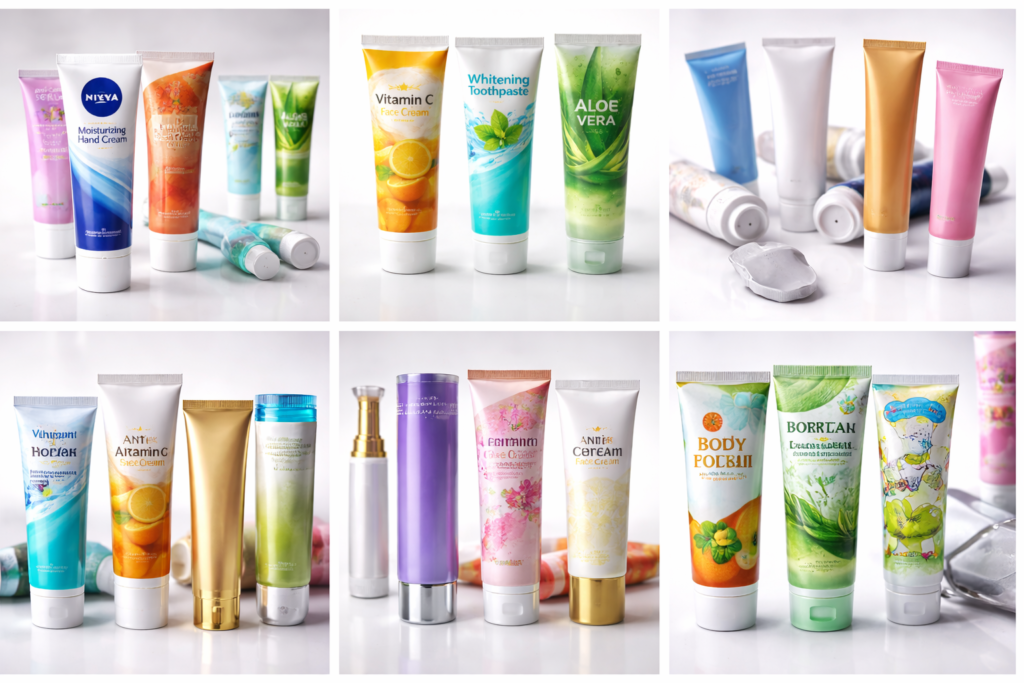
Laminate Tubes for Advanced Flexible Packaging What are Laminate Tubes? Laminate tubes are a hybrid of aluminum tubes and plastic tubes. They efficiently protect contents thanks to many overlaid layers, one of which is the barrier layer.Depending on the product and contents, laminate tubes can have a barrier layer of aluminum, plastic, or ceramic, and in the case of transparent laminates, a barrier of polyester. Laminate Used For Pharma industry– lip guard tube, dermatology cream, ointment cream tubeFMCG industry- herbal toothpaste/ayurvedic, white toothpaste, fairness cream tube, anti-fungal cream tube, herbal cosmetics tube, hair colour tube, shaving cream tubes.Mainly used for cosmetic & toothpastes. Benefits of Lamitubes Multi-layer lamitubes with aluminum foil/nylon/polyester act as a barrier against oxygen, moisture, and aroma loss, and provide a glossy surface, enhancing printing quality. Different types of caps on lamitubes and of different designs give an aesthetic look. Easy to open and close. Very hygienic Efficiently protect the contents over time. Lamitubes are a cost-effective solution to help increase a product’s shelf life. Lamitubes with their smooth, flexible, and soft exteriors deliver sealability and enable high filling line speed during the packaging process. Disadvantages (Limitations) of Lamitubes Due to the use of aluminum foil for laminated tubes-Invisible content, poor environmental protection, poor resilience, and lower composite strength. Due to the use of EVOH barrier layer plastic tubes, the cost will be 20%-30% higher. Problem in the production process. Tubes will be extruded before printing. Thus, efficiency is low in printing as the technology is complex. Some Popular Brands of Lamitubes All Tub Taql Optika Essel

Laminate Tubes Read More »

Guala Caps

Guala Caps

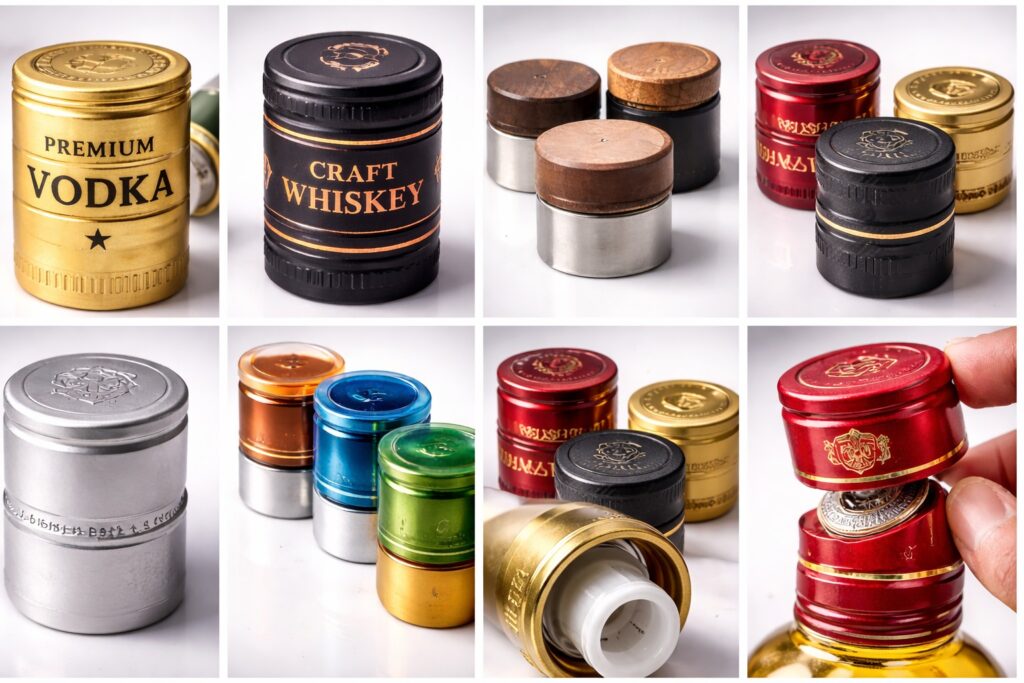
Guala Caps for Safe and Reliable Packaging Closures What are Guala Caps? Guala Caps, which secure the closure onto the bottle by means of vertical pressure. “Roll-on” is a capping system that secures the closure onto the bottle by means of rollers that bend a component of the closure under a bead of the bottle.Guala Closures is the global benchmark in the production of premium closures for an extensive range of products such as whisky, vodka, tequila, and imported wine labels. Our position as the world leader has been established through a sustained research effort on materials and decoration techniques. For Oil Products Guala Closures provides a diversified range of caps, both short and long, with pourers that have been specifically designed for the viscosity of the olive oil, enabling perfect pouring, featuring anti-drip devices to avoid drips from occurring when pouring is interrupted. For Wine Products The wine producers will share with you their passion for their wine, the soil, the grape they used, the best moment to drink it, and what food to accompany it.Endless possibilities to liaise with all wine Apps, VIP club, Loyalty rewards, discounts, in-store activities, social media, and much more. Types & Benefits of Guala Caps Guala Closures Group produces high-technology closures specifically designed for olive oil. These closures ensure excellent performance in protecting product quality through: Oxidation & Contamination Prevention: Minimizing risks common when consuming bottled oil in small quantities. Pour Control: Precise management of the quantity of oil dispensed. Anti-Drip Technology: Eliminating drips along the bottle when pouring is interrupted. Non-Refillable Systems: Specially designed devices to prevent the practice of refilling. The Benefits of Aluminium Screwcaps Aluminium closures, paired with the correct liner, provide a perfect seal that prevents liquid leakage and protects the wine from external flavors.Sustainability & RecyclingInfinite Recyclability: Aluminium can be recycled practically to infinity. All products recovered through separate waste collection can be reused to produce new screwcaps. Circular Economy: Your wine screwcap is likely produced from recycled aluminium—including other screwcaps—meaning the quality of the wine is guaranteed while safeguarding the environment. Performance & Quality ControlGuala Closures wine screwcaps are used by leading manufacturers across five continents. Compared to traditional corks, they offer significant advantages: Organoleptic Integrity: No impact on the wine’s taste or aroma; eliminates “cork taint.” Oxidation Shield: Prevents air from spoiling the wine, ensuring it lasts longer over time. Stability: Maintains the wine’s delicate balance, even during transport. User Convenience: Makes bottles easier to open and re-seal, preserving taste for longer. Customization: Supports a variety of decoration techniques to meet specific brand and marketing requirements. Market Snapshot Platforms like Alibaba.com offer a wide range of Guala-style products, with the inventory consisting of approximately 89% bottles and 7% lids, caps, and closures.

Guala Caps Read More »

Corrugated Box

Corrugated Box

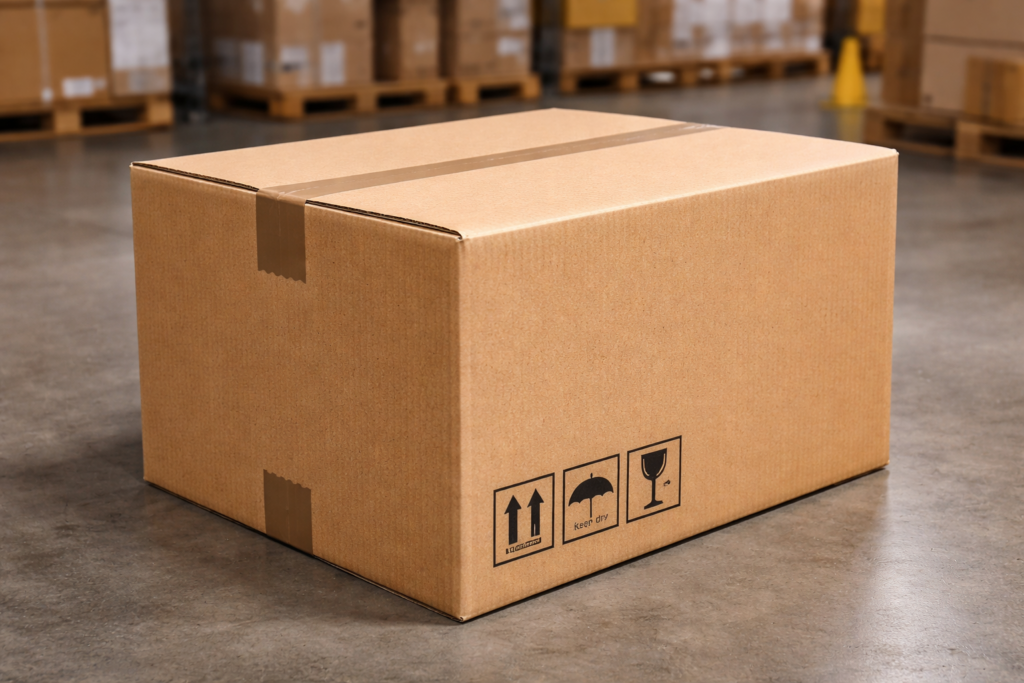
Corrugated Box for Strong and Reliable Packaging Solutions What is a Corrugated Box? Corrugated box design involves balancing machine design factors for corrugated fiberboard boxes with functional, physical, processing, and end-use requirements. Specifically, packaging engineers work to meet the performance requirements of a box while simultaneously controlling total costs throughout the system. Furthermore, manufacturers create corrugated boxes from corrugated paper boards that contain rows of air columns. Both the corrugated medium and linerboard consist of Kraft containerboard, a paperboard material usually over 0.01 inches (0.25mm) thick. In addition, experts call corrugated fiberboard “fiberboard,” although the term “cardboard” can describe any heavy paper pulp-based board. Corrugated Box Used For Corrugated box design involves balancing machine design factors for corrugated fiberboard boxes with functional, physical, processing, and end-use requirements. Packaging engineers work to meet the performance requirements of a box while controlling total costs throughout the system. Manufacturers create corrugated boxes from corrugated paper boards that contain rows of air columns. Both the corrugated medium and linerboard consist of Kraft containerboard, a paperboard material usually over 0.01 inches (0.25mm) thick. Experts call corrugated fiberboard “fiberboard,” although the term “cardboard” can describe any heavy paper pulp-based board. Key Benefits of Corrugated Packaging Its high-tech construction ensures the material can carry a wide range of weights, protects against moisture, and provides a sustainable packaging solution. Specifically, these customizable and very cost-effective options represent the least expensive cartons available. Reliable Protection: Corrugated boxes keep items safe during long-distance transportation, shipping, and handling. Moisture Resistance: The material keeps moisture away from the products, which is especially important for food products that must withstand long shipping times. Sustainability: You can easily recycle these materials after use. High-Tech Design and Manufacturing Manufacturers make corrugated cardboard from arched paper known as fluting. This fairly high-tech solution utilizes advanced computer design and manufacturing systems. These designs make corrugated cardboard the best choice for many packaging solutions. Protective Strength: Lightweight and high-strength flutes act as protective liners for your goods. Added Flexibility: The material offers additional benefits; for instance, Air Seal Containers provides custom corrugated boxes upon request. Operational Efficiency: Streamlined corrugated boxes fit seamlessly into any packaging operations. Corrugated Box Types and Construction Half-slotted type: These corrugated boxes basically consist of one piece with a glued seam. These are open-faced. Slotted-type boxes Rigid type boxes Single face: A single sheet of linerboard and a corrugated medium bond together with glue. Double face: A corrugated medium sits between two sheets of linerboard (one on each side) glued together. Triple-wall corrugated boxes: These are the heaviest type and can handle significant movement and weight, ranging from 240 to 300. Die-cut custom: Manufacturers produce these boxes to your specific requirements in all shapes and colors, matching the specific size, shape, or fragility of your goods. Corrugated trays: These corrugated containers function as small rectangular boxes that feature no flaps. FAQs Is corrugated the best material for boxes? Corrugated boxes are among the best materials for packaging due to their strength, lightweight nature, and cost-effectiveness, though the best choice depends on the product and application. Can corrugated boxes be recycled? Yes, corrugated boxes are fully recyclable and can be reused to produce new packaging materials. How should I provide the dimensions? Provide dimensions in length × width × height (L × W × H), typically in millimeters or inches, based on internal box size. When can I use a corrugated box versus a crate? Use a corrugated box for lightweight to medium products and standard shipping, and choose a crate for heavy, fragile, or high-value items requiring extra strength and protection. Corrugated boxes are among the best materials for packaging due to their strength, lightweight nature, and cost-effectiveness, though the best choice depends on the product and application. Yes, corrugated boxes are fully recyclable and can be reused to produce new packaging materials. Provide dimensions in length × width × height (L × W × H), typically in millimeters or inches, based on internal box size. Use a corrugated box for lightweight to medium products and standard shipping, and choose a crate for heavy, fragile, or high-value items requiring extra strength and protection.

Corrugated Box Read More »

Bar Code

Bar Code

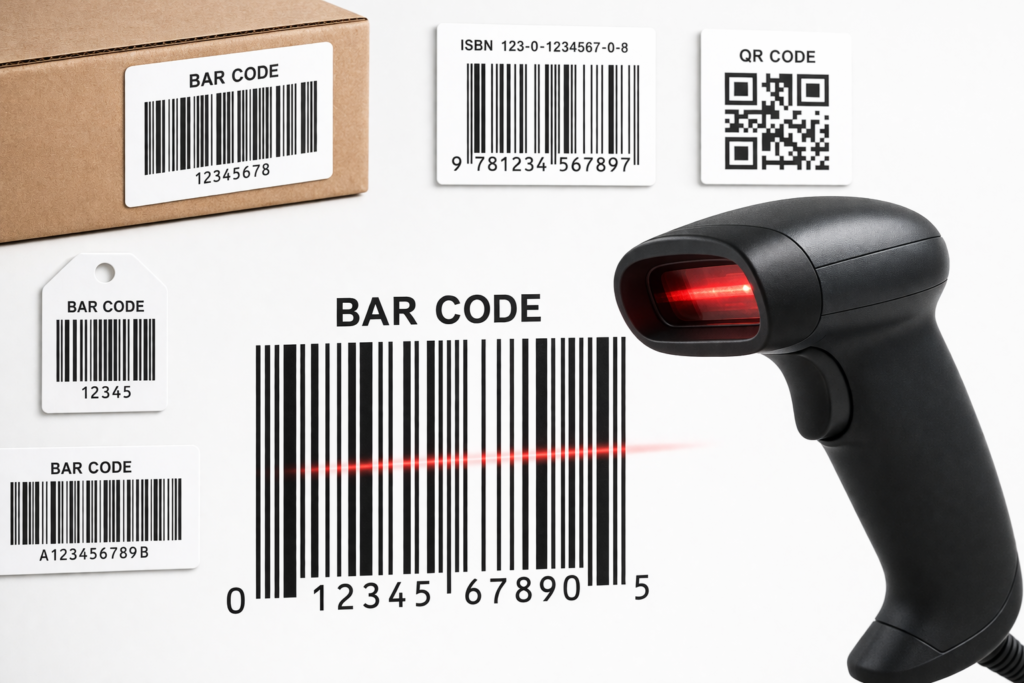
Bar Code Systems for Accurate Product Identification and Tracking What is Bar Code? We may define a bar code as a series of bars and spaces arranged according to the encoding rules of a particular specification to represent data. The purpose of a bar code is to represent information in a form that is machine-readable. Scanning devices read bar codes and analyze the structure of the bars and spaces to transmit the encoded data in an electronic format. You can then store these data in a file or transmit them to a computer for processing. The main benefits of bar codes are speed and accuracy. You can capture data automatically by reading a bar code in a fraction of a second, much faster than manual key entry. Error rates with automatic data capture are usually lower than 1 in 1,000,000 readings. Benefits of Bar Coding Customer Benefits Detailed Receipts: Customers receive a clear breakdown of their purchases, including the article name, price, and promotional points earned. Faster Checkout: Reducing manual entry leads to significantly shorter queues and a quicker shopping experience. High Accuracy: The system reduces the risk of price errors to nearly zero because it minimizes human intervention. Cost Savings: Increased efficiency for the distributor can lead to lower prices for the consumer. Benefits for the Retailer Financial Security: Accurate pricing and error-free checkouts minimize financial losses. Labor Efficiency: Faster checkouts allow for more efficient use of staff members. Real-Time Stock Tracking: Retailers know the exact status of in-store stock, article by article, at any given moment. Automated Reordering: The system alerts the retailer to place a new order before stock levels reach a “danger zone” based on pre-set parameters. How the System Works The Price Look-Up (PLU) File: The retailer maintains a database containing the EAN code, the price, and the description of every article. Dynamic Updates: When a supplier changes a price, the retailer updates the database and the aisle labels (often using digital displays in modern systems). Inventory Integration: The system links the database to the cash registers. Every time an employee scans an item: The system retrieves the price for the customer. The system automatically deducts the item from the total stock count. Versatility While common in supermarkets, businesses can adapt these scanning and automation advantages to any retail environment, including bookshops, textile stores, and small grocery shops. What Type of Bar Code To Use A bar code symbology is a set of rules describing the way bars and spaces have to be organized to encode data characters. EAN International has developed a unique and advantageous method for managing and allocating numbers to companies around the world. Whether or not companies encode these in a bar-code symbology (in machine-readable format), the numbers provide the following benefits: EAN allocates a unique number for each unit. They are non-significant: the EAN number in itself acts as the key to access a database, which contains precise information on the unit. They are multi-industry and international: their non-significance enables their use in all sectors, and their uniqueness permits their use across borders. They are secure: EAN numbers include a check digit which guarantees secure data capture. All trading partners understand EAN numbers, which constitute an “international language.” We need to cover specific rules and concepts to explain how companies can effectively put EAN bar codes on food packaging. The most important distinction lies between a retail unit and a trade unit. As much food comes in packages that vary in weight, price, and content, we must examine which specific rules apply in these cases. We define a retail unit as any trade unit that the manufacturer intends to cross the point of sale in a retail outlet. Companies identify trade units with a standard number which remains unique for the series of identical items produced in the same pre-defined version. EAN provides an integrated system for the identification of trade units based upon three standard numbering systems: EAN-8, EAN-13, and EAN-14. The standard EAN numbering structures ensure full technical compatibility at the data content level. Different specifications apply depending on whether the unit has a fixed or a variable measure. Users draw EAN article numbers, which identify trade units, from a global pool of 14-digit numbers. Logically, all EAN article numbers function as one of these 14-digit numbers. Choice between EAN-8, EAN-13, and EAN-14 EAN offers two options for numbering trade units. The first option, EAN-13 or EAN-8, is mandatory for retail units, though you may apply it to other trade units in general. The second option, EAN-14, only applies to trade units that represent a standard and stable grouping of a series of trade units already identified with either an EAN-13 or EAN-8 article number. Allocating The Numbers General Rule The general rule states that each different trade unit must carry a different unique number. This implies that the brand owner must assign a different number to each variant. For example, you must allocate a separate, unique EAN article number to each different size or color of a garment. When a user company assigns EAN-13 article numbers to their products, we recommend that they allocate them sequentially. You must allocate a separate unique EAN number to promotional variants of trade units that affect the size or the weight of the product. For trade units containing units which are themselves promotional variants or minor product variants of trade units whose EAN article numbers remain unchanged, follow this rule: If you must distinguish the trade unit for effective ordering, handling, and tracking, allocate a separate EAN article number to that trade unit. Examples include promotions limited to certain geographical areas or date-specific promotions. If the identification of minor product variants only matters to the manufacturer, distinguish these variants by using the attribute Product Variant. Examples include minor package design changes or side-loading as opposed to top-loading cases. Product Changes We may define “Product Changes” as any change or improvement a brand owner decides upon during the life of a

Bar Code Read More »