
Cling Wrapping for Hygienic and Secure Food Packaging
What is the Cling Wrapping
Cling wrapping is a thin plastic film typically used for sealing food items in containers to keep them fresh over a longer period of time.
Plastic wrap is commonly made out of PVC (Poly Vinylidene Chloride). The most popular alternative in recent years is LDPE (Low-Density Polyethylene) because it is considered to be safer for the body.
A thin transparent plastic film (CLING FILM) that adheres to surfaces and to itself, used as wrapping or covering for food, is plastic or cling wrapping.
“Wrap them in cling film and freeze till needed.”
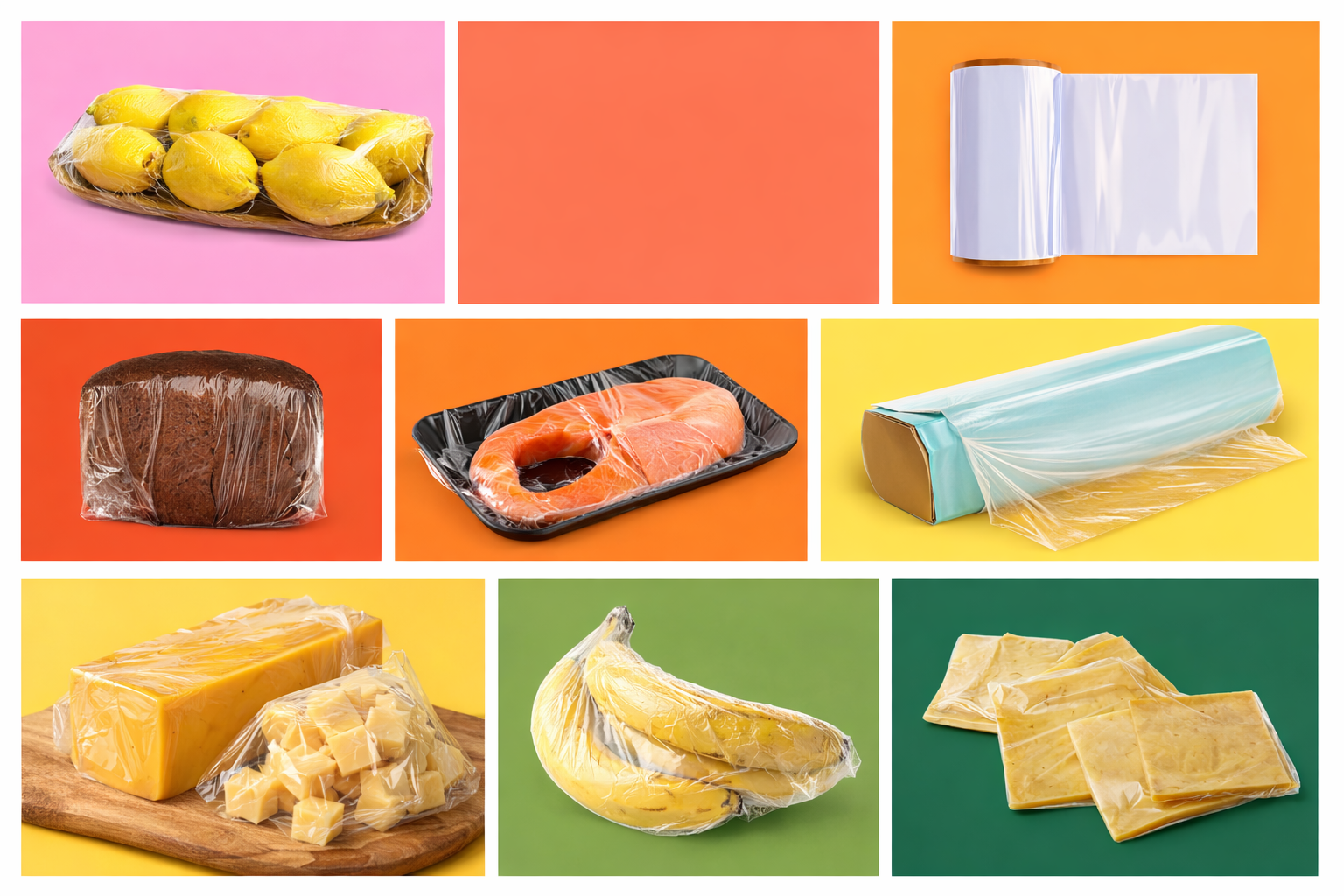
Cling Wrapping Used For
Food Storage
Cheese, half a lemon, a crusty loaf of bread, fruits, vegetables, cover a bowl, pack a snack, sandwich, lunch pack, bread wraps.
Gift packing
Benefits of Cling Wrapping
- Cling film is less expensive (food plastic wrap)
- Cling wrap grips tightly and seals easily around a variety of surfaces to help keep your food fresher, longer.
Limitation of Cling Wrapping
- Do not allow cling wrap to come into direct contact with food when heating it.
- Heating food covered with plastic can melt the plastic on the food.
- Cling film is made from PVC, which contains disrupting phthalates, a chemical that keeps plastic soft.
- Cling film has been banned in America
FAQs
How thick is plastic wrap?
Can I use plastic wrap in the microwave?
Yes, you can use plastic wrap in the microwave if it is microwave-safe and does not touch the food.
Can plastic wrap be used to freeze food?
Yes, plastic wrap can be used to freeze food as it helps prevent freezer burn and keeps food protected.
Are the all plastic wraps are safe for packing foods?
No, not all plastic wraps are food-safe; only those labeled food-grade or BPA-free should be used for packaging food.