Packaging Materials

Retortable Pouches

Retortable Pouches

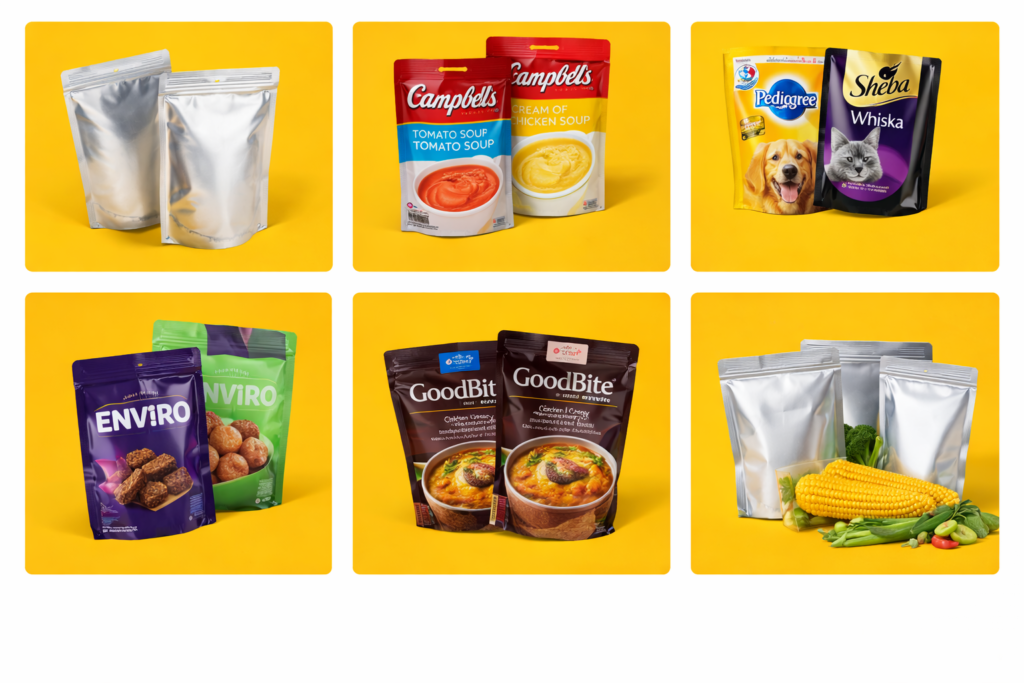
Retortable Pouches: Reliable Packaging for Ready-to-Eat Foods What are Retortable Pouches? Retortable pouches are sterilizable flexible food packages made from composite aluminium foils—these pouches contain viscous “curries” which are extensively consumed in Indian households. After manual or semi-automatic/automatic forming and filling operations, the pouch is sealed, and then a batch of pouches is retorted in a counter-pressure autoclave. The retorted pouches are then cooled and stored at ambient temperature.The consumer can heat the product in the retort pouch itself, and the food is ready to eat.Retort pouches are available in flat and stand-up configurationsRetort pouches are flexible, laminated structures that can withstand thermal processing and are utilized to package different kinds of food products. Common Applications Seafood Meat Rice Beans Sauces Prepared meals Ready-to-Eat (MREs), which can be eaten cold or warmed by submersing in hot water Through the use of a flameless ration heater, A meal component introduced by the military in 1992. Retort pouches are used in field rations, space food, and fish products Camping food, Instant noodles, Benefits of Retortable Pouches High barrier structure for thermal processing Lightweight Shelf stable Cost-saving alternative to metal cans Straight-tear technology to ensure clean and easy opening Printing possibility Ability to ship more products in fewer truckloads Unique shapes that will stand out on store shelves. Better taste due to less heating time. Less energy is required to manufacture pouches Transport of empty containers is cheaper Effective gas barrier A retort pouch is a space-saving package by virtue of its design, and this is definitely a merit for a good package. Limitations The customer cannot see the contents that are stored inside before purchasing.The first obstacle is that processors often require a large capital investment for the unique machinery.Filling is slower and more complex compared to metal can lines.The thermal process is complex due to the number of critical processing parameters that must be monitored (e.g., residual air, pouch thickness, steam/air mixture).Also, special racking systems may need to be set up in order to provide optimal heating media flow and prevent pouch-to-pouch contact.Since pouches are more easily punctured, they may require over-wrapping for distribution.Specialized equipment, such as a burst tester or a tensile tester, is required for leak detection and container. Types of Retortable Pouches • Preformed pouch in line formed Pouches• Pillow Pack• 3-side sealed• 4-side sealed • Stand-up pouch

Retortable Pouches Read More »
HDPE Woven Bags

HDPE Woven Bags

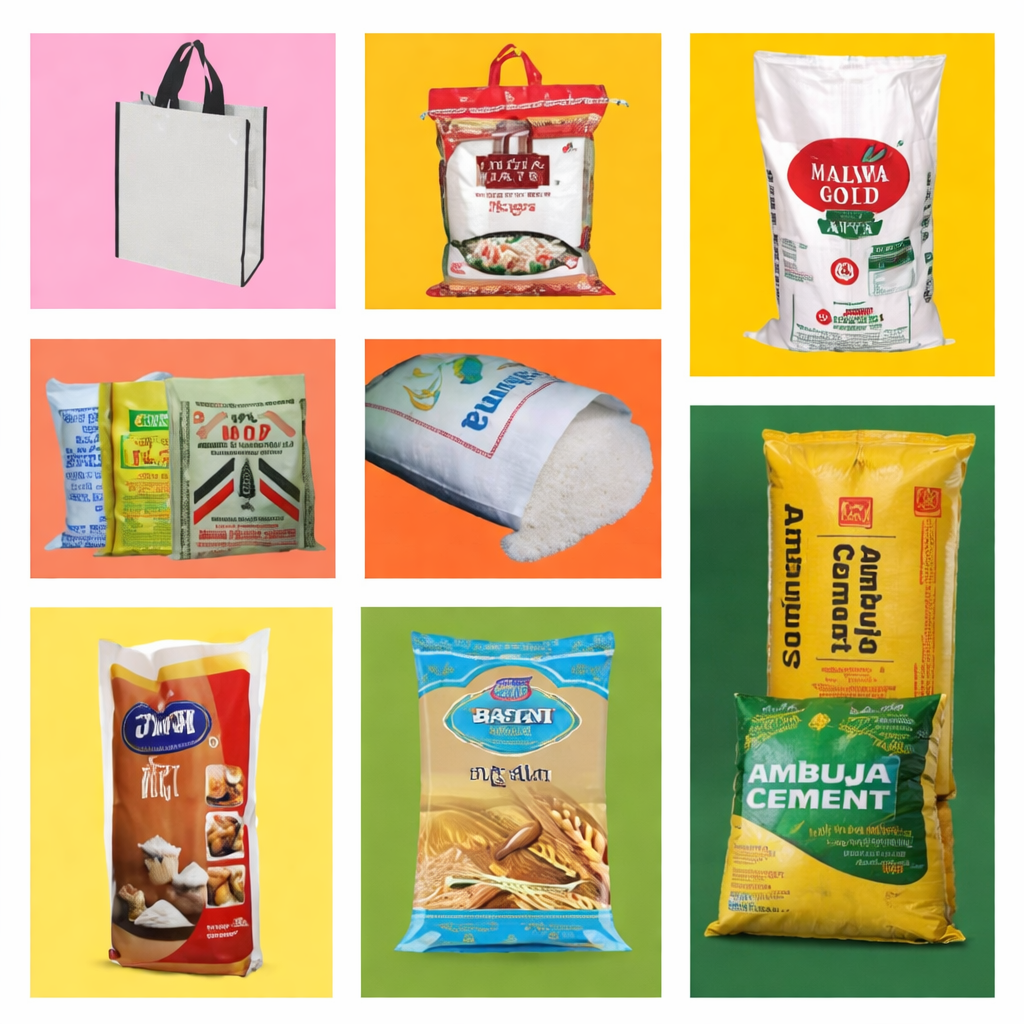
HDPE Woven Bags Fibre which contains PP and HDPE blended polymers is PP/HDPE fibre. A bunch of straight fibers with twist make yarn. By yarn interlacing, fabric can be made, and a bag that is prepared from this fabric is a PP/HDPE woven bag.HDPE woven bags and sacks are considered the most durable and strong packaging options available. It is widely used to pack a variety of granular materials, completely protected from rain, dust, and moisture.These bags have a stitched bottom, an open mouth, and are duly non- laminated. What is HDPE? High-density polyethene (HDPE) is a thermoplastic polymer produced from the monomer ethylene with a high strength-to-density ratio.HDPE is used in the production of plastic bottles, corrosion-resistant piping, geomembranes, and plastic lumber.Polyethylene (Polythene) is one of the world’s most popular plastics. Two major types of PE are in use in the films and flexible packaging sector. LDPE (Low density) and HDPE (High density), which are used for most thin-gauge carrier bags, fresh produce bags, and some bottles and caps.HDPE woven bags are manufactured using optimum-grade raw materials such as polypropylene (PP) and HDPE. These bags have a stitched bottom, an open mouth, and are non-laminated. HDPE Bags Used For Salts, minerals Fertilisers, chemicals Sugar, rice, wheat(flour) Animal feed Cement & other chemicals Oil seeds Salt Pesticides Detergents Plastic granules Other uses Shopping bags Deck chairs Book binding Carpet backing Cinema screen, wall facing Benefits of HDPE Woven Bags • Non-toxic• Lighter in weight• Moisture resistant• Chemical resistant• Stronger& can withstand much higher impact loads.• Much cleaner and resists fungal attack• Competitive in price,(cheaper than jute bags)• Printed/ unprinted• White, natural, or as per requirement colours available• Better resistance to dropping.• Do not impart any odour to the food product packed in it.• Not attacked by insects.• Most hygiene Let’s understand HDPE Woven Bags through video

HDPE Woven Bags Read More »

Bopp Tape

BOPP Tape

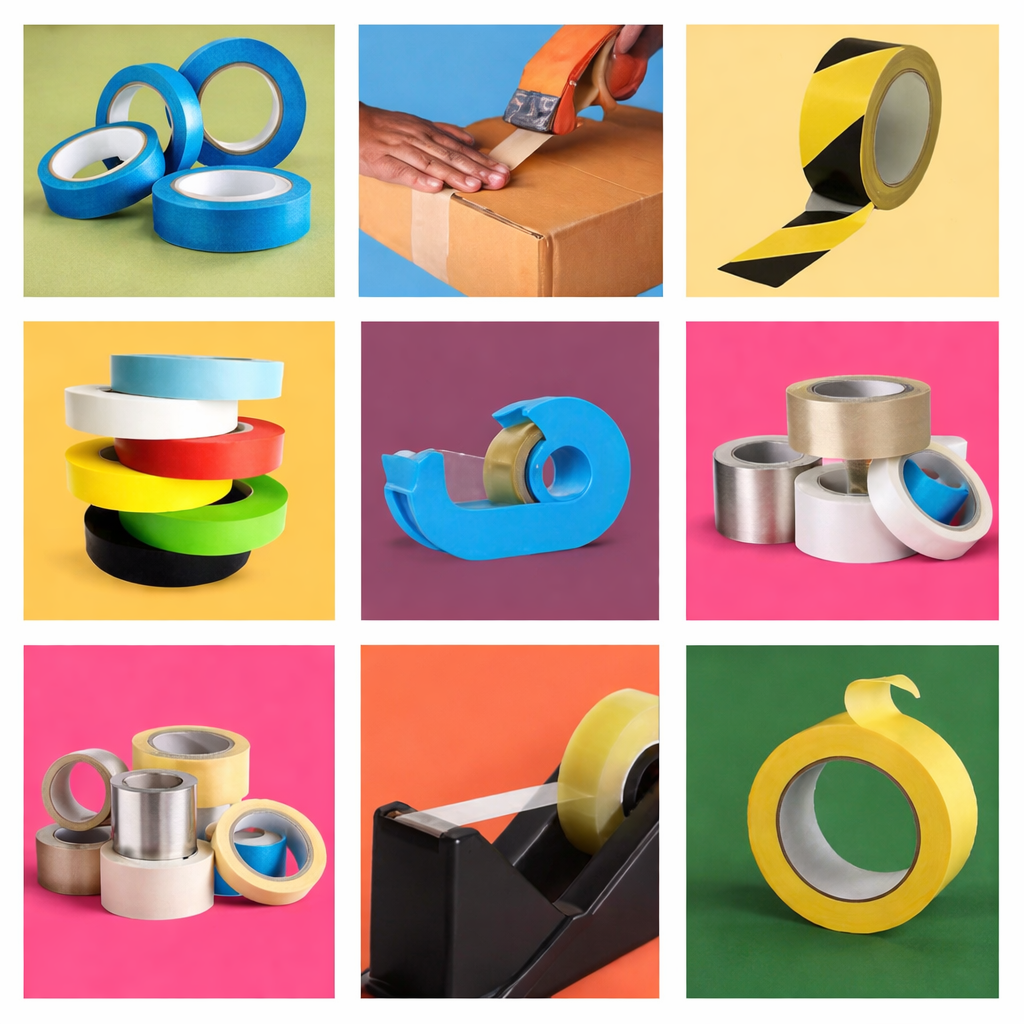
BOPP Tape for Strong and Reliable Carton Sealing What is BOPP Tape? BOPP packing tape is manufactured from biaxially oriented polypropylene film. As a thermoplastic polymer, this material is known to be pliable above specific temperatures before it is returned to a solid state upon cooling. Because of this unique structure, both the automated and manual application of the tape is greatly facilitated. BOPP is defined as a film that has been “Biaxially Oriented,” meaning the material is stretched in both the machine direction (MD) and across the machine direction (AMD). Through this process, a substrate with superior strength, flatness, and excellent printability is created. Due to its fatigue resistance and reasonable economics, this film is frequently utilized for packaging, labeling, and graphic applications. Furthermore, an orderly molecular structure is formed during the orientation process. Finally, BOPP laminated polypropylene is categorized as a petroleum byproduct where the biaxially oriented layer is placed over a woven interior. Common Application Tape BOPP film is commonly used for applications that require moisture resistance, optical clarity, and high tensile strength, such as: Food & Beverage Packaging.The commonly used adhesive packing tapes that are used in sealing medium to heavy-duty carton sealing, shipping, inventory management, and in logisticsindustries are actually BOPP tapes. High tensile strength and rugged nature make it ideal to use for packaging and labeling. Benefits of BOPP Tape • Resistant to abrasion,• Chemically reacting agents,• Burst and moisture.• The surface of the film is easy to print and coat, which makes it useful for custom-printed BOPP packing tapes.• The tape can be easily slitting when required.• BOPP tapes, being a thermoplastic polymer, work in both extreme temperatures, which means at low as well as high-temperature ranges.• The adhesives commonly used are hot-melt synthetic rubber, as it seals quickly, reliably, and consistently.• These adhesives bond quickly to the surface with additional properties like UV, shear, and heat resistance The outstanding features which compliment the tapes are: Excellent clarity and high gloss. Flawless dimensional stability and flatness. Wrinkle and shrink-proof. Non-toxic and recyclable. Resistant to low and high ranges of temperature. UV, heat, and moisture resistant. Let’s understand BOPP tape through video

BOPP Tape Read More »

Glass Containers Packaging

Glass Containers

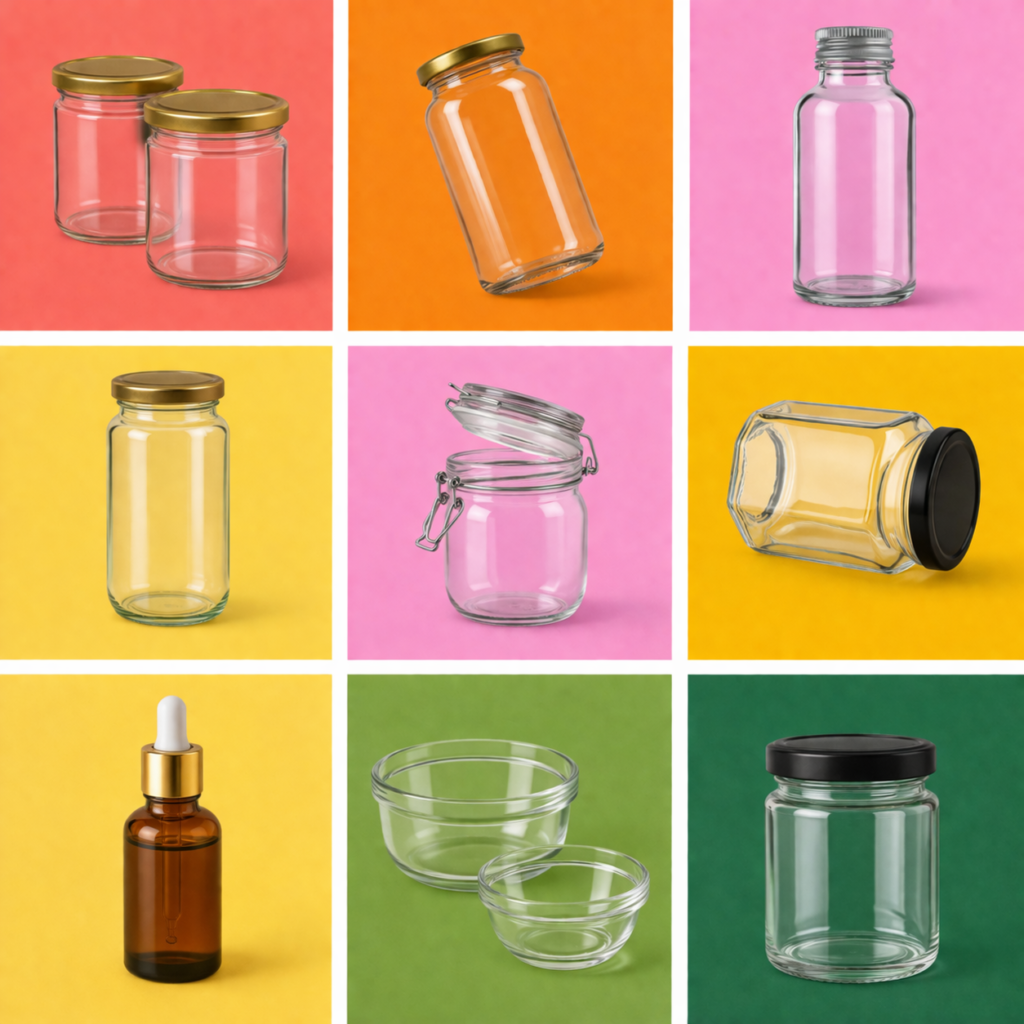
Glass Containers Packaging for Secure and Eco-Friendly Applications What is Glass Container Packaging? The glass containers has been a traditional packaging material for many years.The glass container is the most suitable medium for the packaging of all types of preparations. There are three main raw materials for glass making, viz, silica sand, soda ash, and lime, which are cheaply and freely available as a natural resource. Glass as a packaging material has some unique properties.Glass containers of different shapes and sizes have been used for the packaging of a variety of products for many years. It seems to be one of the most favoured packaging media, particularly for sensitive & corrosive products.The effectiveness of glass containers as a package is achieved only with an equally effective closure system, and there is a variety of closures used for closing and sealing glass containers, depending on their size. Glass Containers Used For Pharmaceutical products- Ointments, pills & tablets, syrup, powders, injectables/transfusions Dairy products–cheese, milk, ghee Liquor- breweries, beer & liquor Food products- Jams, Jellies, squashes, pickles, spices, cheese, ghee, confectionery Soft drinks, tea, coffee, milk beverages Cosmetics oils Chemicals-spirits, oils Ink Meat, fish Benefits of Glass Packaging Most suitable medium for the packaging of all types of preparations, be they in the form of a pill, powder, jelly, liquid, or vapour. A glass container will receive any product, whether it is hot or cold, with or without vacuum, sterilised, or processed. It does not taint, pollute, or affect the quality of its contents Very high shelf life, especially for pharmaceutical products packed in type 1 containers. The product appearance, colour, consistency, over- and under-fills, or accidental inclusion of foreign material can easily be detected. Glass containers do not contaminate the contents with crystal or particles as found in the packages made of metals or alloys. Variations in the weather do not affect the glass containers or the products packed within them. Eco-friendly/recycled Types of Glass Containers There are three types of glass. Type 1– A borosilicate formulation, this type is usually reserved for parenteral (injectable) products, particularly those that are alkaline in nature. It is 10 times more durable than soda glass (Pharmaceutical products). Type 2- A soda lime glass treated with sulfur in the annealing phase to reduce alkali solubility. It is used for parenterals, sometimes alkaline, but more likely acidic or neutral. Type 3– A regular soda lime (flint) glass that has been tested and shown to be at or below a specified extractives level. It is intended for more sensitive products. Most commonly used in food applications. Blown glass containers– narrow neck and wide mouth jars in green or blue colours. Neck ring or bead- protruding ring just above the neck-ring parting line. All glass bottles have this, so they can be removed from the machine. Disadvantages of Glass Packaging Fragility- Glass is strong- it has a firm shape and supports the contents of the package, but it is also fragile. Breakable, easily broken or damaged.Weight- Glass is heavy compared to paper, plastic, or even some metal containers.Safety- If the glass breaks, it becomes much more dangerous than a torn paper bag.

Glass Containers Read More »

Composite Containers

Composite Containers

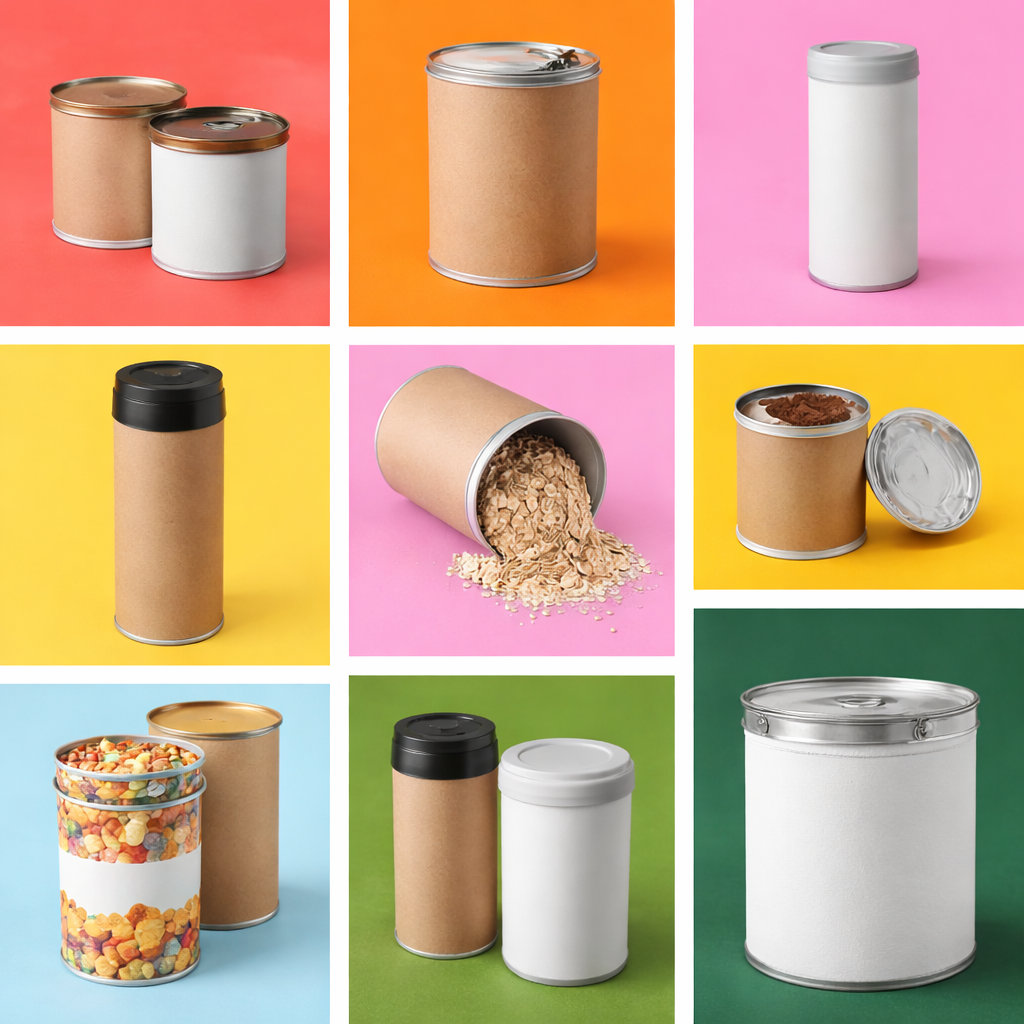
Composite Containers: Durable and Versatile Packaging Solutions What are Composite Containers? Composite containers are specialized canisters manufactured from a blend of constituent materials. Generally, these units consist of paper, high-grade boards, and Kraft paper, which are then reinforced with metal or plastic ends. In various industrial sectors, this packaging is frequently referred to as a “Combican.” To ensure maximum durability, a laminated version is created. In this process, Kraft paper and boards are laminated with polyethylene and heat-sealed with a membrane. By utilizing this multi-layered approach, the container is made 100% leakproof, providing a secure environment for sensitive goods. Common Industry Applications of Composite Containers Because of their versatile nature, composite containers are utilized across a vast array of sectors. Currently, they are frequently seen in the packaging of: Food Products: Spices, custard powder, masala, processed foods, and various milk derivatives. Pharmaceuticals & Chemicals: Tablets, capsules, pesticides, and detergent powders. Liquor & Beverages: Spirits and non-carbonated drinks. Furthermore, when the laminated variety is used, the scope of application widens significantly. Consequently, these containers are considered suitable for high-moisture items such as jams, fruit pulps, frozen vegetables, and motor oil. Key Advantages of Composite Packaging There are several reasons why manufacturers are shifting away from traditional materials. First and foremost, composite containers are light in weight, inexpensive, and entirely non-corrosive when compared to standard tin alternatives. Additionally, this format is recognized as a disposable packaging solution that effectively supports goods with a shelf life of one to two years. From an ecological perspective, these units are considered environmentally friendly. It is also worth noting that for volumes up to 1 liter, the structural stability of the can is often found to be superior to both glass and tin. Manufacturing and Structural Composition The production of composite containers is typically handled through two primary techniques: the convolute method or the spiral winding method. Regardless of the method chosen, the final product is normally comprised of five essential components: The Liner: Provides the internal barrier. The Body Wall: Offers structural integrity. The Label: Used for branding and information. The Bottom End: Usually metal or plastic. The Top End: Often includes a seal or pull-tab. Quality Grades and Functionality In the current market, two distinct quality grades of composite containers are manufactured to meet specific needs. The first is the standard “Packaging Can,” which is built tight enough to hold lumpy products, granules, and general powders. The second grade is the “Instant Can.” This version is engineered to be tight enough for hygroscopic products, such as instant coffee or tea. By using a heat-sealed internal web, caking and clog formation are prevented because humidity penetration is blocked. Through this advanced sealing technology, even liquid penetration is contained, ensuring that composite containers remain a top choice for modern logistics.

Composite Containers Read More »

Aluminum Containers

Aluminum Containers

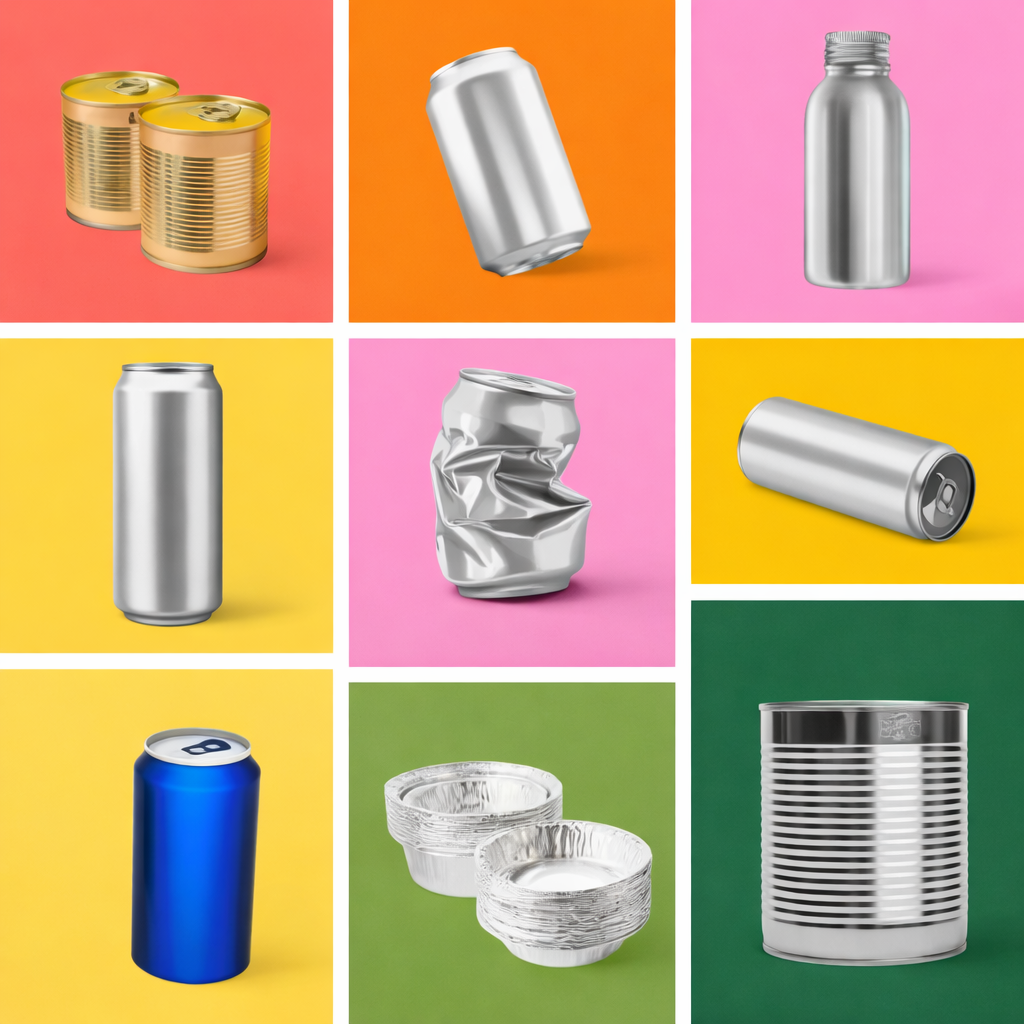
Aluminum Containers: Durable and Efficient Packaging Solutions What are Aluminum Containers? Aluminum containers are an alternative to tin plate cans for packing food products and beverages. In recent years, several food products have been commercially packed in aluminum cans. Aluminum and its alloys are being used widely in a variety of forms in the field of packaging. Aluminum foil is also used as a laminate along with plastic as a flexible packaging material. Aluminum Containers Used For Food Products, Fruits & Vegetables Pineapple (chunks) Peach halves Tomatoes Green bean Peas Beets Peas in tomato sauces Apricot halves Beans Spinach Fruit & fruit juices Asparagus 2. Meat Products 3. Alcoholic Drinks 4. Milk Products Advantages of Aluminium Container Aluminum cans are lightweight, which is an economic advantage. It is versatile in terms of performance, aesthetic appeal & design. From the consumer’s point of view, aluminum can has a modern, clean, and bright image. Easy metal to fabricate in can be manufactured, aluminum accommodates itself to different types of equipment. It can be shallow, deep drawn, soft-welded, or seam-welded. Easy open ends with apertures can be prepared for aluminum. Corrosion of the can does not produce coloured products. These cans are non-toxic, odourless, and do not have a metallic taste. Impervious to moisture and gases necessary for food packaging. Essentially pinhole-free. Disadvantages of Aluminum Containers Empty aluminum cans cannot be supplied in a flattened condition, and hence, the transportation cost is high. Aluminum is softer than a tin plate and must be handled with care during packing and transportation Special precautions are necessary during sterilization and cooling. Aluminum has a greater tendency to bleach some of the highly pigmented products. Aluminum cans need beading if they are meant for processed food products. Types of Aluminum Containers Aluminum containers used for packing food products are fabricated in following forms Conventional three pieces can Drawn cans (shallow or deep drawn) used in the dairy industry & fish products. Impact extruded cans (Collapsible tubes/ Aerosol containers) Drawn and redrawn can (used for carbonated drinks, beverages, and beers) F.A.Q Aluminum Container What types of products can be packed in aluminum packaging? Aluminum packaging is used for beverages, food, pharmaceuticals, cosmetics, and industrial products due to its strong protective properties. Can you packaging be used to transport food stuffs? Yes, packaging can be used to transport foodstuffs safely, as it protects them from contamination, moisture, and damage during handling and transit. What temperature can you packaging and their seal withstand? Packaging and its seals can typically withstand a wide temperature range, from freezing conditions to around 120–200°C, depending on the material and sealing type. What are you recommendation for storage of your aluminum packaging? Aluminum packaging should be stored in a clean, dry environment away from moisture, direct sunlight, and extreme temperatures to maintain quality. Why use aluminum packaging? Aluminum packaging is used because it is lightweight, durable, and provides excellent protection against moisture, light, and contamination. What are the qualities of aluminum used for your packaging? Aluminum used for packaging is lightweight, corrosion-resistant, durable, non-toxic, and provides excellent barrier protection against light, moisture, and air. What materials are used in the manufacture of your sealing system? Sealing systems are typically manufactured using stainless steel, aluminum, high-grade plastics, and durable sealing components such as rubber or silicone. Aluminum packaging is used for beverages, food, pharmaceuticals, cosmetics, and industrial products due to its strong protective properties.Yes, packaging can be used to transport foodstuffs safely, as it protects them from contamination, moisture, and damage during handling and transit.Packaging and its seals can typically withstand a wide temperature range, from freezing conditions to around 120–200°C, depending on the material and sealing type.Aluminum packaging should be stored in a clean, dry environment away from moisture, direct sunlight, and extreme temperatures to maintain quality.Aluminum packaging is used because it is lightweight, durable, and provides excellent protection against moisture, light, and contamination.Aluminum used for packaging is lightweight, corrosion-resistant, durable, non-toxic, and provides excellent barrier protection against light, moisture, and air.Sealing systems are typically manufactured using stainless steel, aluminum, high-grade plastics, and durable sealing components such as rubber or silicone. Let’s understand Aerosol Packaging through video

Aluminum Containers Read More »