
Cushioning Material for Safe and Protective Packaging
What is the Cushioning Material
A cushioning material performs its fundamental role—reducing the forces created when one surface comes abruptly into contact with another—by compressing or deforming in such a way as to produce a gradual, rather than instantaneous, change in velocity. This reduces potentially high decelerations to more moderate values and thereby minimizes damaging impact forces.
Package cushioning is used to protect items during shipment. Vibration and impact shock during shipment and loading/unloading are controlled by cushioning to reduce the chance of product damage. Cushioning is usually inside a shipping container, such as a corrugated box.
A cushion is a soft, furry bag of some ornamental material, stuffed with wool, hair, feathers, polyester staple fiber, non-woven material, or even paper torn into fragments. It may be used for sitting or kneeling upon, or to soften the hardness or angularity of a chair or couch.
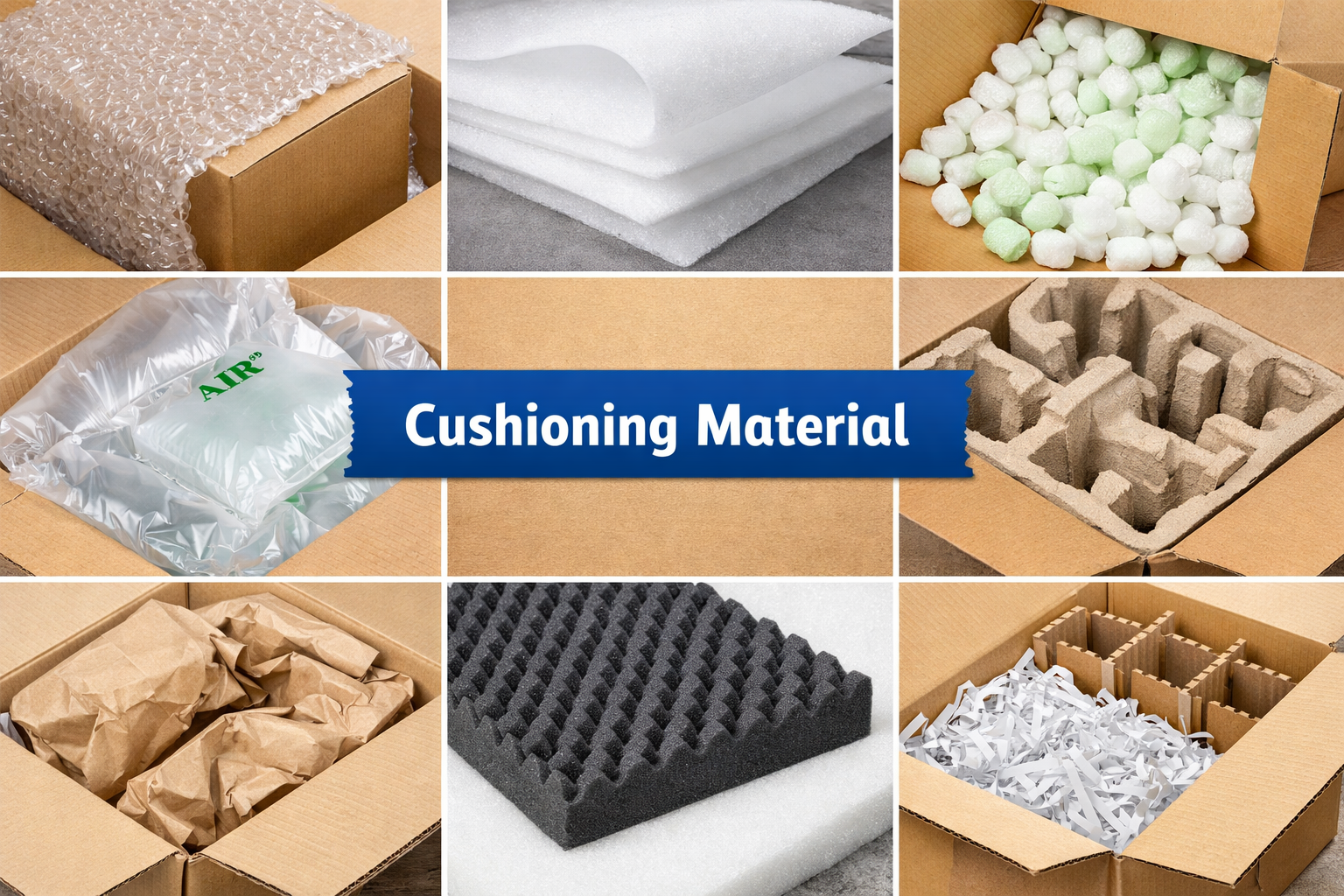
Types of Cushioning Material & Benefits
Paperboard composite honeycomb structures are also used for cushioning. Foam structures – Several types of polymeric foams are used for cushioning. The most common are: Expanded Polystyrene (also Styrofoam), polypropylene, polyethylene, and polyurethane.
Biodegradable Bubble Cushioning
Besides being eco-friendly, biodegradable bubble cushioning offers excellent protection for shipping and storing fragile items. Each sheet, roll, or bag consists of multiple air cushions that look like air bubbles. These air cushions are evenly distributed, which protects fragile items from shock and vibration.
Invented in 1960 by engineers Marc Chavannes and Al Fielding,
Bubble Cushioning minimizes the need for additional packaging materials, which decreases the cost of the shipment. It is also lightweight, which keeps shipping charges low. Besides bags, sheets, and rolls, bubble wrap comes in large bubble, small bubble, anti-static, and even self-adhesive varieties.
However, the cushioning needs to be properly selected for good performance. Important features of cushioning include:
material type
material thickness
material resilience (the material returns to its original shape after impact)
correct loading (i.e., the cushion material is not too soft (overloaded) or too hard (insufficiently loaded) for a very fragile object)
free movement of the cushioned item (i.e., the object is not tightly bound in the cushioning material)
Bubble wrap consists of sheets of plastic film with enclosed “bubbles” of air. These sheets can be layered or wrapped around items to be shipped. A variety of engineered inflatable air cushions is also available. Note that inflated air pillows used for void-fill are not suited for cushioning.
Bubble Wrap® Protective Packaging
Bubble Wrap® is one of the most recognized packing solutions on the market. It has been protecting your package contents for years. Bubble Wrap® air bubble film offers an economical solution for protective packaging needs. This packing solution reduces cost while providing long-term protection. Bubble Wrap® provides high performance and is also reusable/recyclable. Find out how Bubble Wrap® protective packaging can benefit your shipping operation.
Loose fill– Some cushion products are flowable and are packed loosely around the items in the box. The box is closed to tighten the pack. This includes expanded polystyrene foam pieces (Foam peanuts), similar pieces made of starch-based foams, and common popcorn. The amount of loose fill material required and the transmitted shock levels vary with the specific type of material.[2]
Paper– Paper can be manually or mechanically wadded up and used as a cushioning material. Heavier grades of paper provide more weight-bearing ability than old newspapers. Creped cellulose wadding is also available. (Movers often wrap objects with several layers of Kraft paper or embossed pulp before putting them into boxes.)
Corrugated fiberboard pads– Multi-layer or cut-and-folded shapes of corrugated board can be used as cushions.[3] These structures are designed to crush and deform under shock stress and provide some degree of cushioning. Paperboard composite honeycomb structures are also used for cushioning.[4]
Foam structures– Several types of polymeric foams are used for cushioning. The most common are: Expanded Polystyrene (also Styrofoam), polypropylene, polyethylene, and polyurethane. These can be molded, engineered shapes or sheets that are cut and glued into cushion structures. Convoluted (or finger) foams are sometimes used [5]. Some degradable foams are also available.[6]
Foam-in-place is another method of using polyurethane foams. These fill the box, fully encapsulating the product to immobilize it. It is also used to form engineered structures.
Plastic foam cushioning materials are mainly made from polystyrene (PS), polyurethane (PU), and polyethylene (PE)
Molded pulp– Pulp can be molded into shapes suitable for cushioning and for immobilizing products in a package. Molded pulp is made from recycled newsprint and is recyclable.
Inflated products–
Other– Several other types of cushioning are available, including suspension cushions, thermoformed end caps[7] [8], and various types of shock mounts.
C Tapered cell walls absorb shock and dampen vibration. Top film construction enables performance-enhancing air transfer between cells. O Cushioning performance unaffected by puncture, age, temperature, or atmospheric conditions
Cushioning limits shocks and vibration to levels that objects can tolerate without damage.
Modern cushioning materials can provide very effective protection for fragile items when they are used correctly.
Rubberized fiber cushioning is relatively insensitive to the effects of moisture and high or low temperatures and exhibits very good recovery even on long-term exposure to loads.
Foam Packing
Foam Packing is fast, easy to use, and versatile. It protects against shock and vibration during shipping and handling. There are many significant benefits to using Foam Packing. Firstly, it saves your money without compromising proper protection. It also saves you time as it instantly expands in seconds for a protective cushion of a package of any size, shape, or weight. Learn more about how these unique cushioning properties can protect your package throughout any shipping process.
Air Bag Protective Packaging
If your products need protective packaging, we have your solution. Fill-Air® Inflatable Packaging Systems provide excellent protection and efficient void fill while reducing material and shipping costs. Fill-Air air bag cushions can be produced in several different sizes to fit any package you have. They are fast and easy to use while saving valuable warehouse space. All the while, producing clean, professional-looking packaging.