
Tin Plate Containers for Durable and Secure Metal Packaging
What are Tin Plate Containers?
The plate is an allowed carbon steel plate coated with tin on both sides. It is used for making open-top sanitary cans. These make excellent containers for packing processed food products. Among metal containers, the tin plate can is considered ideal because of its resistance to corrosion, ease of fabrication, and strength to withstand processing.
A tin plate container is a tinplate package to store and preserve its contents safely till opened or consumed.
A tin plate is purchased in the form of sheets. The thickness of the tin plate used varies from 0.006 “to 0.012”, depending on the requirement of the container
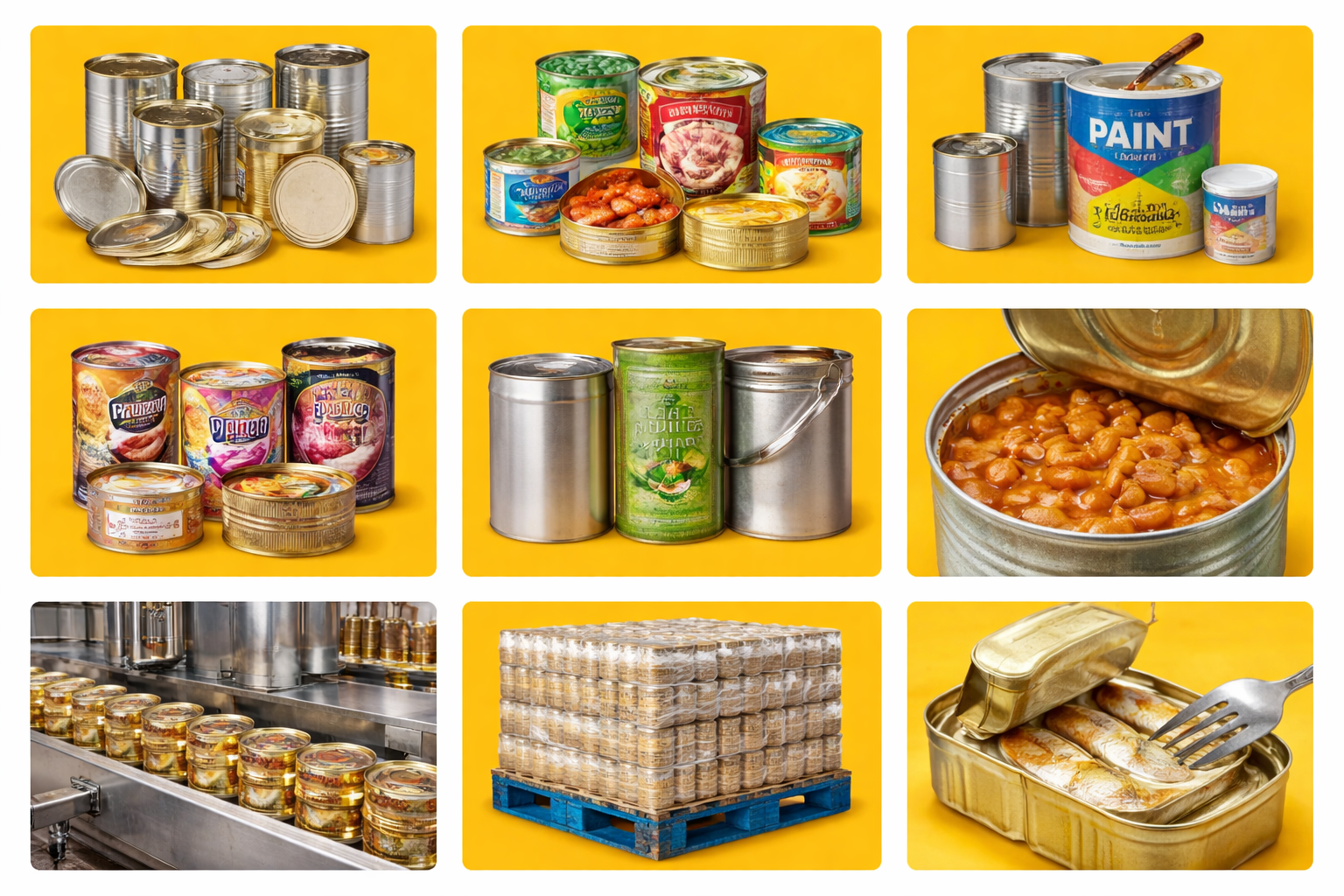
Tin Containers Used For
Fruit & Vegetable– Fruit pulps, fruit slices, tomato juice, fruit juices, juice concentrate. Green vegetables: spinach, green asparagus, dried prunes, green beans, wax beans, peas, cauliflower, cabbage.
- Meat
- Fish
- Soft drinks
- Beer and beverages
- Pesticides, insecticides
- Sweets- confectionery
- Flavored milk
- Industrial products- lubrication oils, paints & aerosols
- Battery cells
- Processed food- baby foods
- Widely used for the packaging of edible oils
Benefits of Tin Plate Containers for Packaging
- Long shelf life
- Excellent printability & attractive appearance
- Freshness and nutritional values of canned food
- Protection during handling and long-distance transportation
- Protection from pilferage and adulteration.
- Compatibility with a wide range of products
- Light in weight, yet strong enough. They can withstand vacuum and pressure.
- They are non-toxic.
- Tin plate has good appearance, corrosion resistance, solderability, non-toxicity, and lacquer ability
- Suitable for high filling and packaging operations.
Disadvantages
- When fruits & vegetables are packed in tin plate containers, the contents react with the container, leading to deterioration of the metal, which is termed as ’corrosion’. This reaction causes the ends of the cans to bulge (hydrogen swell). Such bulged cans are unsalable and may cause heavy financial loss.
- High cost
- Uncertainty about availability
Types of Tin Plate Containers
Different types of tin plate cans are selected depending on the type of fruits and vegetable products packed.
1. Plain cans- better for the products with respect to taste, flavor, and colour
2. Acid-resistant lacquered cans- Better for products that contain soluble anthocyanin pigments, which lose their colour & better for highly corrosive products like fruit pulps, concentrate, etc.
3. High tin fillet (HTF) can- Better for the product, especially some vegetables having the presence of oxalates or nitrate content.
4. Tin-free steel cans- better (useful) for packaging of beers, soft drinks, meat & fish products.
5. Open top containers- useful for processed foods and beverages.
6. General line containers- heavy range from biscuit size to the 20-liter drum for paints and varnishes
Some Popular Brands for The Tin Plate Containers
- HT Pack
- Nikita containers
- Jinyu
- Kaira can
- Tata