
Glass Containers Packaging for Secure and Eco-Friendly Applications
What is Glass Container Packaging?
The glass containers has been a traditional packaging material for many years.
The glass container is the most suitable medium for the packaging of all types of preparations. There are three main raw materials for glass making, viz, silica sand, soda ash, and lime, which are cheaply and freely available as a natural resource. Glass as a packaging material has some unique properties.
Glass containers of different shapes and sizes have been used for the packaging of a variety of products for many years. It seems to be one of the most favoured packaging media, particularly for sensitive & corrosive products.
The effectiveness of glass containers as a package is achieved only with an equally effective closure system, and there is a variety of closures used for closing and sealing glass containers, depending on their size.
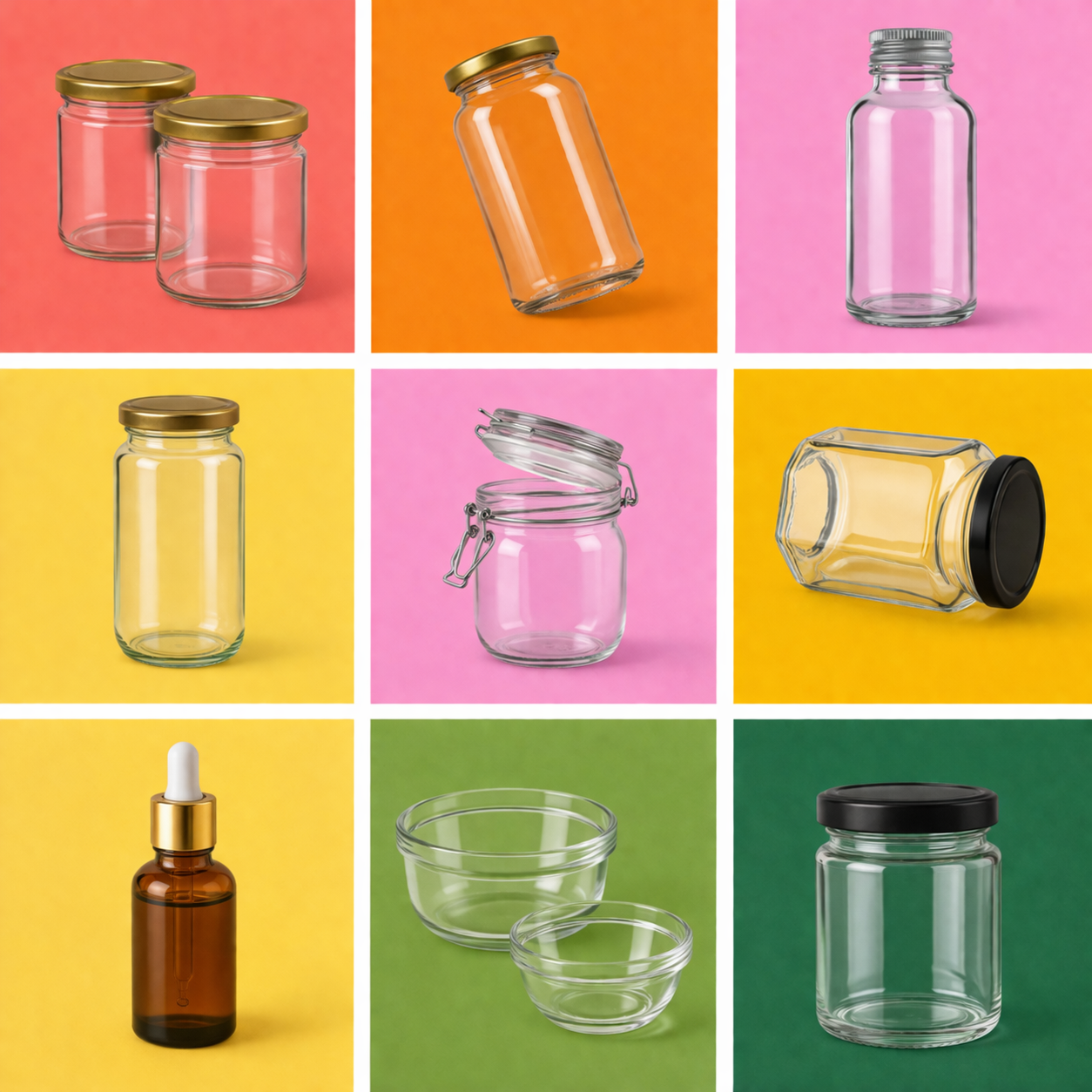
Glass Containers Used For
- Pharmaceutical products- Ointments, pills & tablets, syrup, powders, injectables/transfusions
- Dairy products–cheese, milk, ghee
- Liquor- breweries, beer & liquor
- Food products- Jams, Jellies, squashes, pickles, spices, cheese, ghee, confectionery
- Soft drinks, tea, coffee, milk beverages
- Cosmetics oils
- Chemicals-spirits, oils
- Ink
- Meat, fish
Benefits of Glass Packaging
- Most suitable medium for the packaging of all types of preparations, be they in the form of a pill, powder, jelly, liquid, or vapour.
- A glass container will receive any product, whether it is hot or cold, with or without vacuum, sterilised, or processed.
- It does not taint, pollute, or affect the quality of its contents
- Very high shelf life, especially for pharmaceutical products packed in type 1 containers.
- The product appearance, colour, consistency, over- and under-fills, or accidental inclusion of foreign material can easily be detected.
- Glass containers do not contaminate the contents with crystal or particles as found in the packages made of metals or alloys.
- Variations in the weather do not affect the glass containers or the products packed within them.
- Eco-friendly/recycled
Types of Glass Containers
There are three types of glass.
Type 1– A borosilicate formulation, this type is usually reserved for parenteral (injectable) products, particularly those that are alkaline in nature. It is 10 times more durable than soda glass (Pharmaceutical products).
Type 2- A soda lime glass treated with sulfur in the annealing phase to reduce alkali solubility. It is used for parenterals, sometimes alkaline, but more likely acidic or neutral.
Type 3– A regular soda lime (flint) glass that has been tested and shown to be at or below a specified extractives level. It is intended for more sensitive products. Most commonly used in food applications.
- Blown glass containers– narrow neck and wide mouth jars in green or blue colours.
- Neck ring or bead- protruding ring just above the neck-ring parting line. All glass bottles have this, so they can be removed from the machine.
Disadvantages of Glass Packaging
Fragility- Glass is strong- it has a firm shape and supports the contents of the package, but it is also fragile. Breakable, easily broken or damaged.
Weight- Glass is heavy compared to paper, plastic, or even some metal containers.
Safety- If the glass breaks, it becomes much more dangerous than a torn paper bag.