
Glue Sealing Machine: A Practical Guide to Adhesive Carton Sealing
Introduction to Glue Sealing Machine
A glue sealing machine uses hot melt or cold adhesive to bond the flaps of a carton shut no tape edges sticking out, no staples that could damage contents or injure handlers. The result is a clean, flat seal that holds reliably through transit and handling.
These machines are a staple (pun intended) in industries where both presentation and throughput matter: FMCG production lines, e-commerce fulfillment centers, pharmaceutical packaging, and food processing facilities, among others.
What is a Glue Sealing Machine?
A Glue Sealing Machine is a packaging machine that applies adhesive to carton flaps to create a strong bond. Unlike traditional methods like tape or staples, it provides a clean and professional seal.
It is commonly used in automated packaging systems where efficiency and consistency are important.
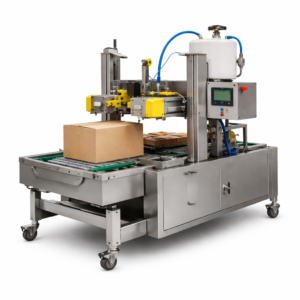
How It Works
The process is straightforward. Cartons are fed onto a conveyor, and the machine’s guides automatically square up the flaps. A glue application head — typically a nozzle or roller system — deposits adhesive onto the flap edges. Compression rollers then press the flaps together and hold them long enough for the bond to set. The sealed carton continues down the line, ready for labeling, palletizing, or dispatch.
The whole cycle happens in seconds. On high-output lines, the unit can handle anywhere from 20 to 60+ cartons per minute depending on the model and carton size.
Where These Machines Are Used
- E-commerce and logistics – High volumes of same-day dispatch make fast, reliable sealing critical. Adhesive sealing handles this better than manual tape application at scale.
- Food and beverage – Hygienic and residue-free inside the carton. Widely used for dry goods, cereals, and bottled products.
- Pharmaceuticals – Tamper-evident packaging often relies on adhesive sealing at the secondary packaging stage.
- Consumer goods manufacturing – From electronics to homeware, clean carton presentation matters at retail.
Types of Glue Sealing Machines
1. Manual
The operator feeds cartons by hand and applies glue using a handheld or bench-mounted applicator. Suitable for very low volumes or irregular carton sizes. Low upfront cost, but slow and inconsistent at scale.
2. Semi-Automatic
Cartons are fed manually, but glue application and flap pressing are automated. A good middle ground for medium-volume operations that can’t yet justify full automation.
3. Fully Automatic
Cartons are fed, aligned, glued, pressed, and discharged without operator intervention. These systems integrate directly into production lines and are built for continuous, high-speed operation.
Key Specs to Check When Buying (New or Pre-Owned)
| Factor | What to Look For |
|---|---|
| Machine condition | Inspect nozzles, conveyor belts, and compression rollers |
| Carton size range | Min/max dimensions the unit can handle |
| Sealing speed | Cartons per minute (CPM) at rated capacity |
| Glue compatibility | Hot melt, cold glue, or both |
| Automation level | Manual, semi-auto, or fully automatic |
| Power requirements | Voltage and energy consumption |
| Spare parts availability | Whether components are still in production |
| Seller reputation | Service history, warranty terms, references |
Final Word
For businesses running medium-to-high volumes, a glue sealing machine delivers a noticeably cleaner result than tape sealed cartons look better, handle better, and are more tamper-resistant. The trade-off is higher upfront investment and a bit more maintenance discipline.
If you’re evaluating pre-owned equipment, prioritize units from reputable OEMs where spare parts are still available. A cheap machine with no service support will cost more in the long run.
Looking to Buy a Pre-Owned Machine?
Share your requirement and connect with trusted sellers offering reliable packaging solutions tailored to your business needs.
FAQs
What is a Glue Sealing Machine used for?
A Glue Sealing Machine is used to seal cartons and boxes using adhesive, ensuring strong and clean packaging for various industries.