
Packaging Systems

Palletization

Palletization

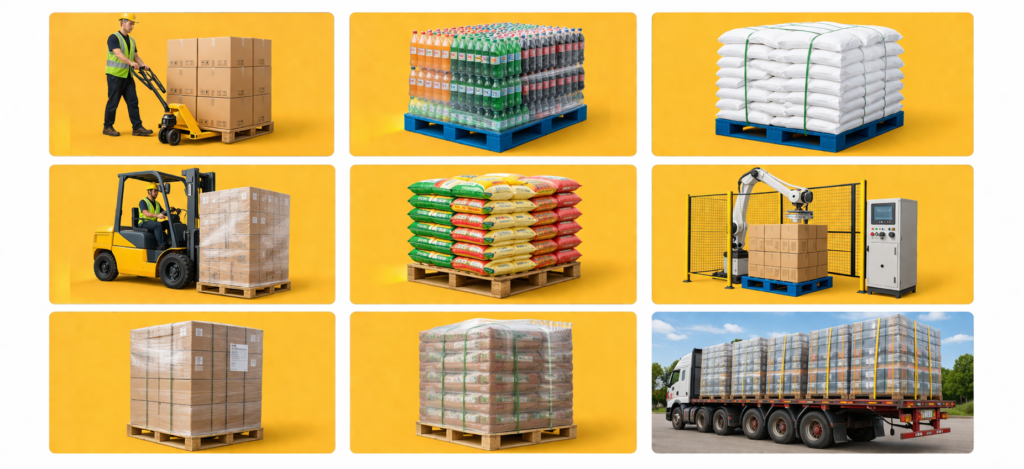
Palletization for Efficient and Reliable Material Handling What is Palletization? Palletization It is method of storing and transporting goods stacked on a pallet (typically a form of tertiary packaging, is a flat structure used as a base for the unitization of goods in supply chain. Pallet is portable, horizontal, rigid, composite platform used as a base) and shipped as a unit load. It permits standardized ways of handling loads with common mechanical equipment, such as forklift trucks. Pallets Used For For light loads, paper pallets (ecopallets) are used. For heavy loads, steel pallets are strong and used for long-term dry storage and loads moved by an abusive logistic system. They are often used for military ammunition Fruits & vegetables-(transportation) Air & sea transport Benefits of Palletization Palletized products can be moved more quickly than by the manual handling of individual palletized cartons. It includes a faster turnaround of delivery. Reduced labour requirement, thus less risk of product damage and worker injury. Products can be moved more efficiently and stored in warehouses. Standard-sized pallets can optimize operations in pallet racks. Customers often prefer the receipt of palletized goods Pallets provide drainage and circulation of commodities requiring this, including fresh produce. Limitation of Pallets Deterioration- repeated use of wooden pallets develops cracks and even breaks under the pressure of continuous use. Infestation- wooden pallets are more susceptible to infestation by termites, ants, and other insects, especially pallets stored outdoors. The insects burrow into the wood, eating away at it and thus weakening what should be a support structure. Cleanliness- in addition to germs, wooden pallets are collectors of dirt and debris, and cleaning them becomes more and more difficult over time as the pallets age.Cost- wood pallets are more expensive than plastic pallets in the long run. Types of Pallets Block Pallets: Wooden structure, recycled wood, plywood & plastic.   1. 4-way entry pallets  2. 12 cylindrical wooden posts Stringer Pallets: 2-way pallets Double Face Pallets Single Face Pallets Solid Deck Pallets Sea & EURO Pallets

Palletization Read More »

Aerosol Packaging

Aerosol Packaging

Automated Aerosol Packaging System for Efficient Production What is Aerosol Packaging? A pressurized packaging system, which can dispense the product out of a container and create an instant aerosol (spray). Aerosols are those particles or droplets, ranging in size from about 0.15 to 5 microns, which are suspended or dispersed in gaseous media such as air, fog, dust, and smoke. Natural aerosols are examples of these. A unique packaging concept acceptable in many consumer products. In this system, the economic container and value system work. The aerosol pack needs product, and the propellant is under higher pressure; the opening of the container is fitted with a special mechanism known as an aerosol valve. The valve is fitted with a plastic tube that reaches to the bottom of the container. Aerosol Packaging Used For As long as the product is non-corrosive and the particle size is lower than 50 microns, it can be packed in an aerosol. Personal care– perfumes, antiperspirant, Hair setting mousse Household- furniture polish, disinfectant spray, glass cleaner, oven cleaner, carpet cleaner, room freshener. Pharmaceutical-Inhalers, inhalation therapy for asthma is totally packed in aerosol. First-aid spray, pain-reliever spray, cooling spray. Industrial- lubricant, silicon spray, Electronic cleaning spray, spray paints, carburetor cleaner, car starting fluid spray, tyre inflator, and sealing. Types of Aerosol (Containers) Three-piece tin-plated steel cans with one inch value opening. They are available in sizes from 50ml to over 1000ml aluminum move block cans are extruded from an aluminum lug. After outside printing, the top part is rolled into a narrow dome and value opening forms (Necking Procedure). These cans are available in a wider range, from 10ml to over 1000ml Glass bottles as aerosol containers offer a wide variety of designs and good transparency. Steel (Stainless) can be used in special cases of pharmaceutical applications. Plastic containers are used but not very popular (acceptable). Benefits of Aerosol Packaging Convenient of use- just by pressing the actuator, one can get the desired product in the form of a five-spray, streamlined jet, foam, or cream. No wastage of products / avoid the mess Controlled rate and quantity of product. Unique use– The effect of five sprays of perfume or a thin layer of hair spray cannot be achieved by any other means of packaging. Quick-drying spray paint and metered dose of inhalation medicine are only possible in aerosol form The aerosol package is hermetically sealed (higher pressure than the atmosphere), and there is no chance of anything entering it No contamination &adulteration is possible Easy to open and close. Types of Aerosol System Solution system Water-Based System Suspension of dispersion system Intranasal aerosols  Foam System 1. Aqueous stable foams 2. Non-aqueous stable foams 3. Quick breaking foams 4. Thermal foams Limitations of Aerosol Packaging Aerosols are costly preparations some of the propellants are very toxic. The cooling effect of highly volatile propellants may cause discomfort on injured skin. A lot of difficulties are faced in aerosol formulation when the drug is not soluble in the propellant. Let’s understand Aerosol Packaging through video

Aerosol Packaging Read More »