
Aerosol Valve Closing Machine: The Standard for Leak-Proof Can Sealing
Introduction
In the production of pressurized goods, the aerosol valve closing machine is the most critical component for ensuring consumer safety and product shelf-life. Unlike standard capping equipment, this specialized system performs a high-precision mechanical crimp to fuse the valve cup to the container. Whether manufacturing personal care products or industrial lubricants, it is essential for achieving the hermetic seal required to hold internal pressure.
What is an Aerosol Valve Closing Machine?
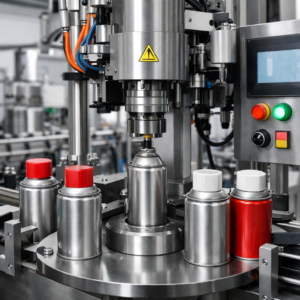
This equipment is designed to crimp and fix valves onto aerosol cans with high precision. It ensures tight sealing to prevent leakage and maintain product integrity.
It plays a key role in packaging pressurized products like sprays and aerosols.
How the Crimping Process Works
The functionality of an aerosol valve closing machine relies on precise calibration to ensure the valve is neither under-crimped (leading to leaks) nor over-crimped (damaging the gasket).
The process typically follows these technical steps:
Positioning: The filled aerosol can is centered directly beneath the crimping head.
Valve Placement: The valve assembly is seated onto the can’t opening (the “1-inch opening” is the industry standard).
The Crimp: The collet of the aerosol valve closing machine expands or contracts to deform the valve cup into the “curl” of the can.
Verification: The machine ensures the crimp diameter and depth meet the exact specifications required for a gas-tight fit.
Critical Industry Applications
Cosmetics & Personal Care: High-speed sealing for deodorants, hairsprays, and shaving foams.
Pharmaceuticals: Precision crimping for metered-dose inhalers and medical sprays where dosage accuracy is vital.
Automotive & Chemical: Securing valves for spray paints, degreasers, and pressurized lubricants.
Household Goods: Reliable sealing for air fresheners and disinfectant sprays.
Operational Considerations
Operating an aerosol valve closing machine requires attention to technical variables:
Pressure Testing: Finished cans must undergo a water bath or electronic leak test to verify the seal.
Component Matching: The crimping head must be perfectly matched to the specific valve cup material (aluminum or tinplate).
Maintenance: Periodic inspection of the crimping jaws is necessary to prevent “burrs” or uneven sealing.
Tiered Automation Levels
Manual Lab Units: Best for R&D departments and very small batch boutique production.
Semi-Automatic Systems: Usually bench-top models where the operator places the can, and the aerosol valve closing machine performs the crimp via a foot pedal or button.
Fully Automatic Rotary Lines: Designed for 24/7 manufacturing, these systems can process hundreds of cans per minute with integrated “No Can–No Crimp” safety sensors.
Technical Checklist: Buying a Pre-Owned Aerosol Valve Closing Machine
| Factor | Critical Verification |
| Crimping Head Integrity | Check the jaws/collets for wear or deformation. |
| Adjustment Precision | Verify that the crimp depth and diameter settings are easily adjustable. |
| $CPM$ Efficiency | Confirm the Cans Per Minute ($CPM$) aligns with your filling line speed. |
| Construction Material | Ensure stainless steel contact parts for pharmaceutical or cosmetic use. |
| Safety Compliance | Look for emergency stop hits and protective shielding around the crimp zone. |
Final Thoughts
Selecting the right aerosol valve closing machine is a foundational decision for any aerosol brand. A high-quality seal not only prevents costly product loss but also ensures the final user interacts with a safe, functional pressurized container.
Looking for a Reliable Sealing Solution?
Whether you need a high-speed automatic unit or a versatile semi-automatic model, sharing your can dimensions and propellant types will help us match you with the best available equipment. Contact us today to connect with trusted machinery suppliers.
FAQs
What is an Aerosol Valve Closing Machine used for?
Which industries use this machine?
It is widely used in cosmetics, pharmaceuticals, chemical, and household product industries.
What types of machines are available?
Manual, semi-automatic, and automatic types are available based on production requirements.
How does this machine work?
It places a valve on the can and uses a crimping mechanism to seal it tightly and securely.