
Screw Capping Machines: The Precision Guide to Leak-Proof Bottling
Introduction
In the world of bottling, the cap is the final handshake with your customer. If it’s too hard to open, they’re frustrated. If it’s leaky, your brand is damaged. A Screw Capping Machine is the automated solution that applies threaded lids to rigid containers with the perfect amount of rotational force (torque).
From craft hot sauces to life-saving pharmaceuticals, this machine ensures every bottle leaves the line with a professional, tamper-evident seal.
What is a Screw Capping Machine?
A closing machine that applies a threaded cap or lid, usually to a rigid container.
It ensures consistent torque and proper sealing, which is essential for maintaining product quality.
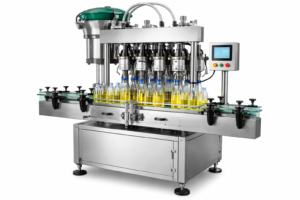
How Screw Capping Works
The process is more than just “twisting a lid.” It involves a synchronized dance between the bottle and the capping head:
- Bottle Indexing: Bottles are spaced out on a conveyor so they hit the capping station one by one.
- Cap Application: Caps are “picked” from a sorter or placed manually onto the bottle neck.
- The Torque Phase: This is the most critical part. The capping head (using rubber wheels or a descending chuck) grips the cap and spins it until a specific resistance is met.
- The Release: Once the “set torque” is reached, the head disengages to prevent stripping the threads or cracking the plastic.
Key Applications
Food & Beverage: Dressings, spirits, oils, and honey.
Pharmaceuticals: Syrups, pill bottles, and nasal sprays.
Cosmetics: Pump-action lotions, shampoos, and essential oil droppers.
Agrochemicals: Pesticides and fertilizers where leak-proof safety is mandatory.
Important: Real Limitations to Consider
Unlike the filling process, capping has its own set of unique hurdles:
Cap Geometry: Standard screw caps are easy, but “trigger sprays” or “pump dispensers” often require specialized, custom-tooled capping heads.
Lining Issues: If your cap has an induction liner or a foam wad, the machine must be calibrated to ensure it doesn’t “crush” the liner while tightening.
Bottle Stability: Tall, thin bottles can wobble during the high-speed spinning process, leading to “cross-threading.”
The Three Main Types of Cappers
| Machine Type | How It Works | Best For… |
| Handheld / Semi-Auto | An operator holds a motorized tool over the bottle. | Small batches, startups, and varied bottle sizes. |
| Spindle (Inline) Capper | Pairs of spinning rubber wheels tighten the cap as the bottle passes by. | High-speed lines where the bottle never stops moving. |
| Chuck Capper | A mechanical “chuck” lowers over the cap, grips it, and twists. | High-precision torque requirements (Pharma/Chemicals). |
The "SurplusPack" Buying Guide for Pre-Owned Cappers
Buying a used capper can save you thousands, but don’t buy without checking these four mechanical vitals:
The Gripper Wheels/Chucks: These are “wear parts.” Check the rubber or silicone for smoothing or cracks. If they are worn out, they will slip and leave caps loose.
Clutch Adjustment: Test the magnetic or mechanical clutch. It should “slip” at the exact same tension every time. If the torque is inconsistent, your reject rate will be high.
Cap Sorter/Feeder: If you are buying an automatic machine, the “Cap Elevator” or “Bowl Feeder” is just as important as the capper. If it jams, your whole line stops.
Height Adjustment: Ensure the hand-cranks for adjusting the machine’s height move smoothly. If you change bottle sizes often, a seized adjustment screw is a nightmare.
Final Thoughts
It is essential for ensuring secure, leak-proof, and professional bottle packaging. Investing in the right machine, especially a reliable used one, can improve productivity and reduce operational costs.
Looking to Buy or Sell a Pre-Owned Machine?
If you are planning to buy or sell a pre-owned Screw Capping Machine, SurplusPack helps you connect with genuine buyers and sellers.
Want to Buy a Machine?
Want to Sell Your Machine?
FAQs
What is the price of a screw capping machine?
The price of a screw capping machine typically ranges from ₹50,000 to ₹5,00,000+, depending on type and automation.
What is the screw capping machine price in India?
In India, screw capping machines start from around ₹50,000 for basic models and can go up to ₹10 lakhs+ for fully automatic systems.
What is the price of a small screw capping machine?
A small screw capping machine usually costs between ₹50,000 to ₹1,50,000, depending on features and build quality.
What are the types of screw capping machines?
The main types include manual, semi-automatic, automatic, and inline screw capping machines, based on production needs.