
Heat Sealing Machines: The Ultimate Guide to Secure Packaging
Introduction
In the packaging world, the seal is the “final frontier.” If it fails, your product spoils, leaks, or loses its premium feel. A Heat Sealing Machine is the industrial workhorse that uses controlled temperature and pressure to fuse plastic films together, creating an airtight, tamper-evident barrier.
What is a Heat-Sealing Machine?
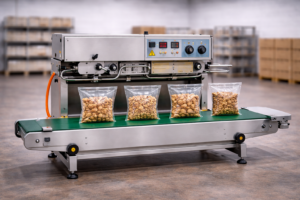
A sealing machine seals a package, usually plastic, by heat sealing.
It creates a strong seal by melting the material at the joint and bonding it together.
How Heat Sealing Actually Works
It isn’t just about getting the plastic hot. It is a precise balance of three variables, often called the “Sealing Triangle”:
Heat: The temperature required to reach the material’s melting point.
Pressure: The force needed to “knit” the two layers of plastic together.
Dwell Time: How long the heat is applied to ensure a bond without burning the film.
The Two Main Technologies (Don't Buy the Wrong One!)
1. Impulse Sealers
How they work: The heating element only gets hot during the sealing cycle. It cools down immediately after.
Best For: Simple plastic bags (PE/PP), retail shops, and low-volume manual packaging.
Pro: Energy-efficient and safe (the jaws aren’t always hot).
2. Constant (Direct) Heat Sealers
How they work: The sealing bars stay at a set temperature all day.
Best For: Thick materials, gusseted bags, foil laminates, and high-speed lines.
Pro: Penetrates thick or coated materials that an impulse sealer can’t touch.
Popular Machine Formats
| Machine Type | Operation Style | Best For… |
| Impulse Hand Sealer | Manual “Press & Release” | Small retail, herbs, or spare parts. |
| Foot Operated Sealer | Pedal-controlled | Mid-sized bags where the operator needs both hands free. |
| Continuous Band Sealer | Belt-driven conveyor | High-speed production; sealing hundreds of bags per hour. |
| L-Bar Sealer | Cuts and seals simultaneously | Shrink-wrapping boxes, books, or multi-packs. |
Common Applications
Food & Beverage: Spices, grains, frozen foods, and coffee pouches (Valved bags).
Medical & Pharma: Sterilization pouches and pill blister packs.
Industrial: Chemicals, fertilizers, and heavy-duty liners.
E-commerce: Poly-mailers and protective bubble packaging.
The "SurplusPack" Guide to Buying Pre-Owned
Buying a used sealer is a smart move because these machines are mechanically simple, but you must check these three critical points:
The Heating Element/Wire: On impulse sealers, look at the “Ni-Chrome” wire under the Teflon tape. If it’s kinked or blackened, it needs immediate replacement.
Teflon Tape Condition: If the brown Teflon tape is charred, the plastic will stick to the bars, ruining your seal and slowing down production.
The “Seal Integrity” Test: Ask the seller to seal a bag of water and squeeze it. If there is even a pinhole leak, the sealing bars might be warped or misaligned.
Cooling Cycle: On automatic machines, check the cooling fans. Proper cooling is what “sets” the seal so it doesn’t pull apart while it’s still hot.
Final Thoughts
A heat sealer is often the most used machine on a packaging floor. While manual foot-pedal machines are great for startups, scaling up usually requires the automation of a Continuous Band Sealer.
Looking to Buy or Sell a Machine?
If you are planning to buy or sell a Used Heat Sealer, you can submit your requirement on SurplusPack.
Want to Buy a Machine?
Want to Sell Your Machine?
FAQs
What is use of heat-sealing machine?
A sealing machine seals a package, usually plastic, by heat sealing.
How does heat sealing work?
It creates a strong seal by melting the material at the joint and bonding it together.
What can I use instead of heat sealer?
For proper sealing, machines like heat sealers or induction sealers should be used. DIY methods like candles or hair straighteners are unsafe and not suitable for industrial use.
Is heat sealing safe?
Yes, heat sealing is safe when operated correctly with proper machine settings and safety guidelines.
What materials can you heat seal?
Heat sealing machines can seal various materials such as PVC, PP, HDPE, and laminated pouches.