
Mastering the Fill: The Ultimate Guide to Net Weighing Machines
In the world of packaging, “close enough” is a recipe for lost profits. Whether you’re bagging premium basmati rice or high-grade chemical resins, every gram over the limit is “product giveaway”money flying out of your pocket. That’s where the Net Weighing Machine comes in. Unlike volumetric fillers that guess based on space, these machines are the precision marksmen of the packaging world.
What Actually Is a Net Weighing Machine?
Think of it as a “weigh-before-you-pay” system. Instead of filling a container and weighing it afterward (Gross Weighing), a Net Weigher pre-measures the product in an internal hopper. Once the target weight is hit, it drops the batch into your bag or box.
The Magic Ingredient: Load Cells. These high-sensitivity sensors monitor the product in real-time, ensuring that if you ask for 500g, you get exactly 500g—not 505g.
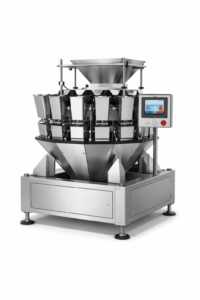
How Does a Net Weighing Machine Work?
The beauty of these systems lies in their rhythmic simplicity:
-
Feeding: The product moves from a bulk hopper into the weigh bucket via vibratory trays or belts.
-
Monitoring: Load cells track the weight as it accumulates.
-
The Cut-off: Once the target is reached, the feed stops instantly.
-
The Discharge: The bucket opens, discharging the “net” weight into the packaging.
-
Reset: The gate closes, and the next cycle begins before the previous bag has even left the conveyor.
Where It Shines (And Where It Struggles)
The Best Fits:
-
-
Food & Agri: Grains, pulses, sugar, coffee beans, and seeds.
-
Industrial: Plastic pellets, fertilizers, and granular chemicals.
-
Pharma: Bulk powder formulations where precision is non-negotiable.
-
The Reality Check (Limitations):
-
The “Stickiness” Factor: If your product is wet, oily, or ultra-fine (like powdered sugar), it might cling to the hopper, throwing off the tare weight.
-
Maintenance: These are precision instruments. If you don’t calibrate them regularly, you’re just using an expensive bucket.
-
Speed vs. Accuracy: While fast, they generally can’t compete with the raw speed of a volumetric filler—but they win on cost-savings per bag.
Choosing Your Engine: Head-to-Head
| Machine Type | Best For… | Description |
| Single Head | Startups & Small Batches | Affordable, reliable, and fits in a tight corner. |
| Dual Head | Scaling Businesses | The “sweet spot” for speed and cost-efficiency. |
| Multi-Head | Industrial Titans | High-speed marvels that use complex algorithms to pick the best weight combo. |
Buying Pre-Owned? Don't Get Burned.
Buying used is a brilliant way to save capital, but it requires a keen eye. Use this checklist before you sign the check:
-
The “Metal” Test: Is it SS 304 (standard) or SS 316 (corrosion-resistant)? For food or chemicals, 316 is often the gold standard.
-
Load Cell Integrity: Ask for the calibration logs. If the sensors are shot, your “precision” machine is just a paperweight.
-
Brain Surgery: Is the PLC (the computer) a recognizable brand like Siemens, Allen-Bradley, or Delta? If it’s a generic, “no-name” controller, finding spare parts will be a nightmare.
-
The Integration Check: Does it “talk” to your current bagger or conveyor? Ensure the triggers (limit switches/sensors) are compatible.
Ready to Upgrade Your Line?
Precision pays for itself. If you’re looking for a reliable Pre-Owned Net Weighing Machine that doesn’t break the bank, we can help you find a unit that’s been vetted for performance.
Want to Buy a Machine?
Want to Sell Your Machine?
FAQs
What is a Net Weighing Machine used for?
How accurate is a Net Weighing Machine?
What is the difference between net weighing and gross weighing machines?
A net weighing system measures the product before filling, ensuring high accuracy. A gross weighing system weighs the product along with the container, which may slightly affect precision.
Should I buy a new or pre-owned Net Weighing Machine?
If budget is a concern, a well-maintained pre-owned machine can be a cost-effective option. However, ensure proper inspection, service history, and spare parts availability.